A property manager's day can start with a resident locked out at the vehicle gate, continue with a leaking unit and a backlog of maintenance tickets, and end with an HOA board asking why operating costs keep rising. The difficult part of managing an apartment complex isn't finding another isolated best practice. It's deciding which access upgrades, staffing changes, maintenance controls, and resident services will improve the property instead of adding another subscription, labor burden, or source of friction.
That decision matters in a residentially concentrated industry. The U.S. property management industry is projected to reach $123.502 billion in 2025, up from an estimated $119.1 billion in 2024, with residential management representing 84.6% of industry revenue, according to ALN Data's property management industry information. Apartment operations sit at the center of that market, so small decisions about work orders, access credentials, and service levels can affect both resident satisfaction and net operating income.
Table of Contents
- The Reality of Managing Apartment Complex Operations
- Building a Maintenance Program That Actually Works
- Modernizing Access Control Without Replacing Everything
- Financial Management and Operational Benchmarking
- Choosing Resident Services That Improve NOI
- Integrating Operations Into a Scalable Framework
The Reality of Managing Apartment Complex Operations
At 8:00 a.m., the office has three competing emergencies. A resident says the gate remote stopped working, a technician needs approval for a failed water heater, and a board member wants an explanation for a vendor invoice that doesn't match the budget.
None of these tasks can be handled by looking at occupancy alone. Access control, maintenance, tenant relations, vendor oversight, collections, compliance, and financial reporting all compete for the same staff attention. A manager who solves one problem by creating another has only moved the pressure downstream.
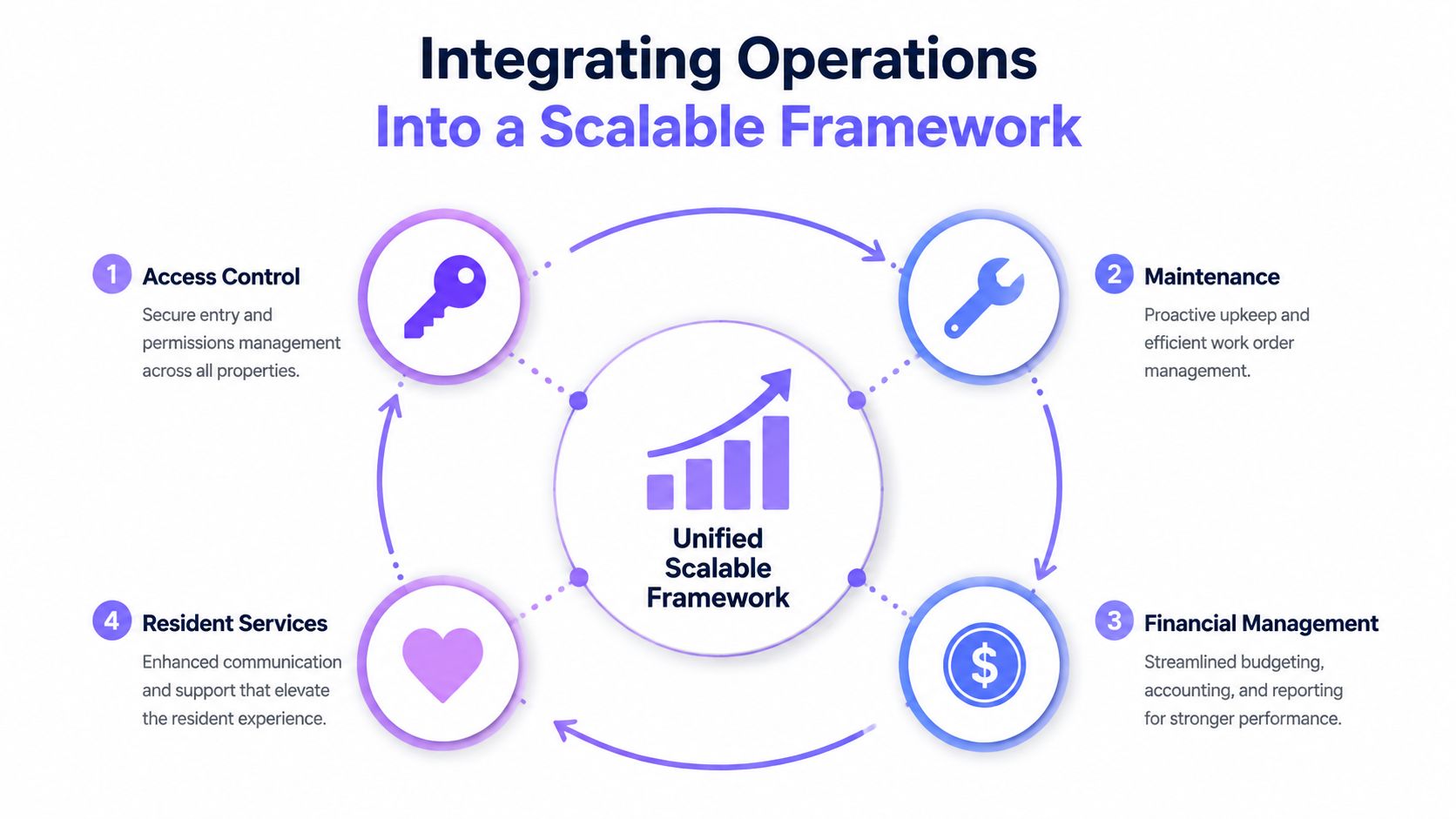
The property's operating system usually rests on four connected pillars:
- Physical operations: Preventive inspections, emergency response, grounds, building systems, and work-order completion.
- Resident experience: Clear communication, reliable entry, guest handling, package access, and fair policy enforcement.
- Financial control: Rent collection, vendor approvals, labor planning, utility monitoring, and per-unit expense analysis.
- Risk and auditability: Access logs, documented inspections, incident records, insurance support, and consistent enforcement.
The federal government's historical Property Owners and Managers Survey treated rental housing management as more than rent collection. Interviewing took place between November 1995 and June 1996, using a nationwide sample of approximately 16,300 housing units rented or vacant for rent from the 1993 American Housing Survey National Sample. The survey examined maintenance, management practices, tenant policy, and financial aspects of rental ownership, which remains a useful reminder that apartment operations have always required coordinated decisions.
Where resources disappear
A recurring mistake is measuring activity instead of outcomes. A full office calendar doesn't prove that the property is being managed efficiently. Staff may spend hours issuing replacement fobs, answering access calls, chasing vendors, or responding to repeat maintenance complaints without reducing the underlying causes.
A better review asks:
- How often does the same issue return?
- Which tasks require staff intervention every time?
- Which resident services produce measurable revenue, retention, or labor value?
- Which expenses protect the asset, and which only preserve an outdated process?
- Can the result be verified through a log, report, invoice, or resident response?
Practical rule: An investment earns its place in the operating budget only when the property can explain what problem it solves, who will use it, and how management will verify the result.
The answer won't always be technology. A property with poor technician coverage may need better scheduling and training before it needs another software platform. A complex with repeated gate failures may need an access retrofit before adding a new amenity. A board that approves services without reviewing usage can turn resident experience into an unmanaged cost center.
Strong managers also separate resident satisfaction from resident requests. A popular service can still damage NOI if it creates support work, liability, maintenance, or underused operating expense. The practical objective is a reliable property where staff time follows urgency, capital follows risk and return, and residents receive consistent service without depending on informal workarounds.
Building a Maintenance Program That Actually Works
Maintenance programs fail when every ticket enters the same queue with the same priority. A leaking pipe, a broken hallway light, and a cosmetic cabinet adjustment shouldn't compete for identical response treatment.
The maintenance workflow should begin with urgency classification, not technician availability.
Set service tiers before assigning work
A workable structure gives each category a clear response expectation:
- Emergency: Active flooding, loss of essential building access, dangerous electrical conditions, or a habitability threat. Dispatch immediately, stabilize the condition, and document the incident.
- Priority: A failed appliance, significant plumbing issue, or security-related defect that affects a resident but isn't creating immediate danger. Schedule prompt attention and escalate if the condition worsens.
- Routine: Cosmetic repairs, minor adjustments, and non-urgent replacements. Batch these efficiently without allowing them to disappear from the queue.
- Preventive: Scheduled inspections and servicing that reduce failure risk. A preventive maintenance scheduling guide can help teams organize recurring tasks instead of relying on memory or scattered calendars.
Each ticket should record the category, assignment time, completion time, parts used, vendor involvement, and whether a callback occurred. Without those fields, a manager can't distinguish slow technicians from difficult assets, poor resident instructions, delayed parts, or an overloaded queue.
Use benchmarks as operating signals
A large multifamily operating dataset reports 6.67% of tickets as emergency work orders, an average completion time of 3.88 days, and 66% completed within 24 hours. The same dataset reports 93.14% completed in-house, 6.86% by vendors, an overall callback rate of 2.01%, and an average technician callback rate of 0.74%. These figures are available in the National Apartment Association discussion of maintenance operations.
The figures don't establish a universal target for every asset. They provide a reference point for asking why a property differs and whether the difference reflects asset condition, staffing, geography, or process quality.
| Metric | Industry Benchmark | Action Threshold |
|---|---|---|
| Emergency work orders | 6.67% of tickets | Investigate a sustained increase |
| Average completion time | 3.88 days | Review aging tickets and parts delays |
| Completed within 24 hours | 66% | Segment by urgency before changing staffing |
| In-house completion | 93.14% | Review vendor dependence and trade coverage |
| Vendor completion | 6.86% | Confirm vendors handle specialized work |
| Overall callback rate | 2.01% | Audit repeat failures and closeout quality |
| Technician callback rate | 0.74% | Coach documentation, diagnosis, and repair quality |
| Open-work-order saturation | 5.98% | Escalate before backlog affects resident service |
| Technician capacity | 109.5 work orders per month | Plan coverage around throughput, not headcount |
The source also reports 5.98% open-work-order saturation and average technician capacity of 109.5 work orders per month. A staffing plan based only on the number of employees misses the more useful question: how many properly completed tickets can the team handle while preserving quality?
Make callbacks a management metric
Callbacks consume labor twice. They also damage resident confidence because the first visit failed to resolve the issue.
Managers should review callback patterns by:
- Technician: Identify training or diagnostic gaps.
- Asset type: Flag recurring failures in HVAC, plumbing, appliances, or access hardware.
- Vendor: Compare repair quality, response, and invoice clarity.
- Ticket category: Separate resident education issues from workmanship failures.
- Parts and documentation: Check whether technicians had the right materials and recorded the repair accurately.
Overusing vendors doesn't automatically improve service. Vendors can be essential for specialized systems, licensing, or surge capacity, but routine work that the in-house team can complete may become more expensive and less controllable when outsourced. The right model uses internal capacity for predictable work and vendors for clearly defined exceptions.
A daily maintenance huddle should review emergency tickets, aging work orders, open-work-order saturation, tomorrow's preventive tasks, and parts or access barriers. That short review gives managers a chance to remove obstacles before residents experience them as missed appointments or repeat complaints.
Modernizing Access Control Without Replacing Everything
Access control creates a visible test of management quality. Residents notice immediately when a keypad fails, a fob disappears, or a shared PIN provides no meaningful accountability. Managers notice the hidden cost through office interruptions, emergency callouts, credential changes, and uncertainty about who entered the property.
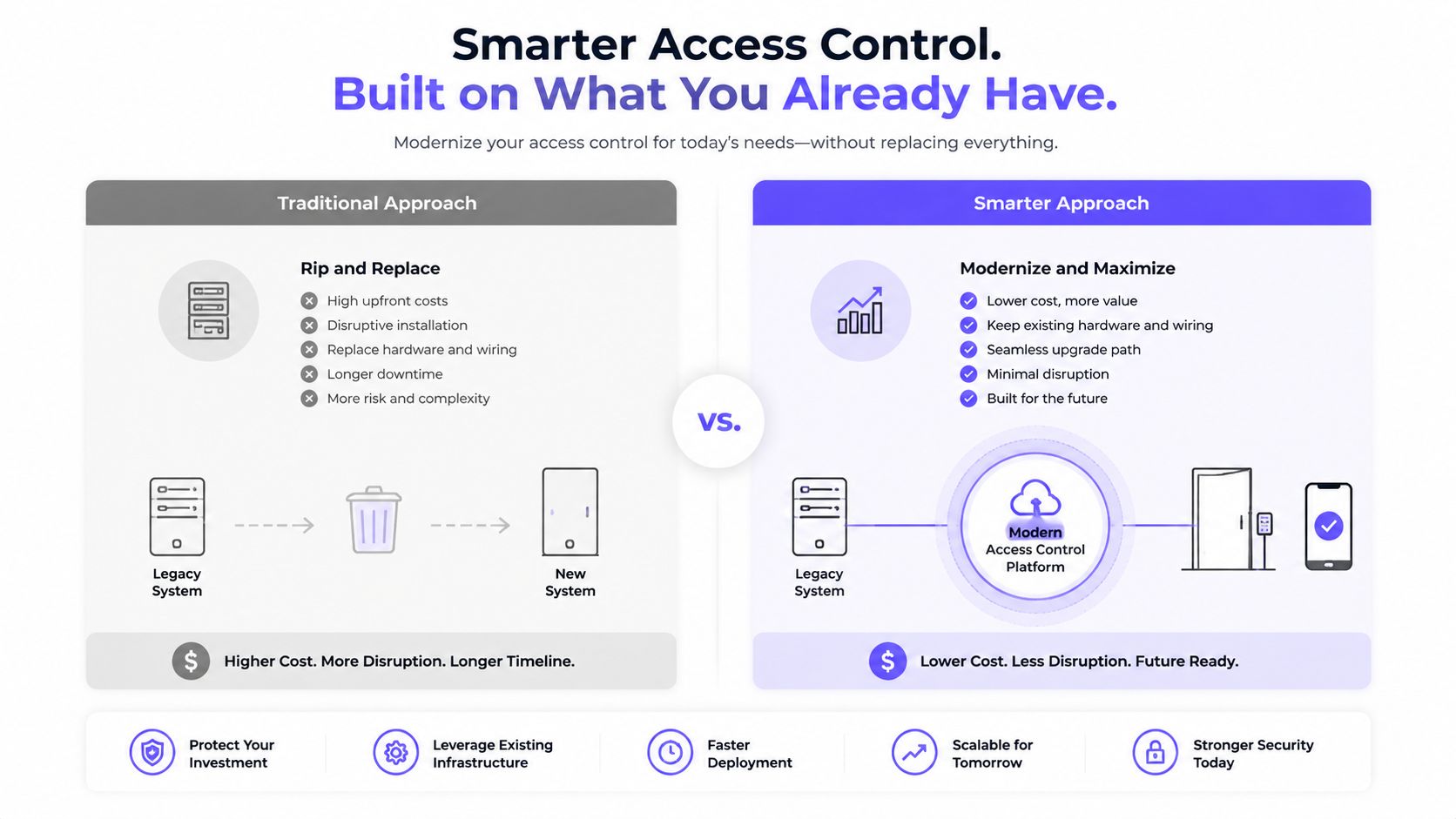
Legacy systems and modern cellular systems solve the same basic problem differently.
Compare the operating models
| Operating question | Legacy approach | Cellular retrofit approach |
|---|---|---|
| Resident entry | Fobs, remotes, or shared PINs | Smartphone-controlled digital credentials |
| Connectivity | Often dependent on local wiring or property internet | Cellular connection, avoiding Wi-Fi dropouts |
| Visitor handling | Manual calls, codes, or office coordination | Remote approval and time-bound passes |
| Credential changes | Staff intervention or physical replacement | Remote granting and revocation |
| Auditability | Limited or fragmented records | Entry logs with credential and time information |
| Hardware strategy | Full replacement may be proposed | Existing gate operator can remain in service |
Property Wi-Fi isn't always a sensible foundation for a perimeter gate. A gate may sit far from the building, depend on unreliable signal coverage, or require trenching where conduit doesn't exist. One cellular gate-access guide identifies LTE or cellular connectivity as practical for perimeter gates and long driveways without existing conduit, while noting that trenching costs typically run $15 to $40 per linear foot all-in.
That cost makes a rip-and-replace proposal harder to justify when the existing gate operator still functions. A retrofit can preserve useful hardware while adding a cloud-based access layer. Nimbio, for example, connects to existing electronic gate operators through a cellular retrofit, supports app-controlled entry, and allows administrators to grant or revoke digital credentials remotely.
The critical question isn't whether an app looks modern. It's whether the system works during a local Wi-Fi outage, fits the existing gate operator, and gives staff reliable control over residents, guests, vendors, and deliveries. Managers evaluating apartment access control should also confirm installation responsibility, fallback procedures, credential lifecycle controls, and reporting access before approving a deployment.
Build visitor management around accountability
Visitor access needs more structure than a permanent shared code. A resident should be able to pre-register a guest, issue access for a defined period, and know that the visit is recorded.
An HOA access platform describes time-bound digital passes, pre-registration for guests, recurring visitors, and contractors, with each visit logged using a timestamp and identity in its visitor management information. Those functions support a practical policy:
- Residents authorize visitors: The resident chooses who receives access.
- Managers control duration: Credentials expire rather than remaining active indefinitely.
- Contractors receive limited permissions: Vendor access should match the scheduled service window.
- Staff can investigate incidents: Logs should show which credential opened the gate and when.
- Former residents lose access promptly: Revocation should happen as part of the move-out checklist.
Remote administration matters during move-ins, lockouts, deliveries, and vendor visits. A 2026 HOA access-control guide frames the core requirement as reliable resident entry, controlled guest and vendor access, and quick removal when someone moves out.
Modernization should preserve what still works. If residents rely on remotes or a functioning keypad, management can phase in smartphone credentials rather than forcing every household through an abrupt replacement. The goal is less friction, stronger auditability, and fewer manual access tasks, not technology for its own sake.
Financial Management and Operational Benchmarking
A property budget can look controlled while hiding weak performance. One complex may spend more on maintenance because it has older systems. Another may show higher staffing expense because it handles a larger site or a more demanding service model. Comparing the totals without context leads boards and managers toward the wrong cuts.
The useful unit of comparison is usually per apartment, followed by normalization against income share. That approach makes it easier to distinguish a genuine operating problem from a market, asset-age, or revenue difference.
Build a comparable dashboard
The National Apartment Association, IREM, and BOMA benchmark system covers 4,666 conventional properties, 1,089,259 units, and 109 U.S. metro markets, according to the multifamily operating benchmark paper. Its scale makes it a substantial reference set for staffing, maintenance budgeting, rent, and expense comparisons, but broad coverage doesn't make a single average appropriate for every property.
A practical dashboard should show:
- Revenue per unit: Compare collected income against the property's own unit count and leasing profile.
- Maintenance expense per unit: Separate routine work, preventive work, capital projects, and vendor spending.
- Labor productivity: Track completed work orders and quality indicators, not headcount alone.
- Access-related workload: Record replacement credentials, lockouts, visitor calls, and incident administration.
- Income-share ratios: Show each major expense as a proportion of operating income.
- Variance by property: Explain the cause of outliers before imposing a portfolio-wide target.
The benchmark source recommends comparing properties on a per-unit basis and then normalizing by income share. That sequence helps prevent a high-income asset or unusually large property from distorting the portfolio dashboard.
Segment before setting targets
Single-market averages are a major trap. A coastal property, an older garden-style asset, and a newer urban building may face different labor availability, building-system requirements, insurance pressures, and resident expectations.
Segment comparisons by:
- Metro market
- Submarket
- Asset age
- Construction and operating profile
- Unit mix
- Service model
- Occupancy and revenue characteristics
A manager can then ask a sharper question: is the property underperforming its true peer group, or is its cost structure appropriate for its operating conditions?
Connect financial controls to physical operations
A maintenance invoice should connect to a work order. A vendor access credential should connect to a scheduled visit. A capital project should connect to a condition assessment, expected risk reduction, or resident-service objective. When those links don't exist, financial reporting becomes a collection of disconnected totals.
Safety planning also belongs in the operating model. Managers evaluating resident-facing safety tools can use this guide to personal safety apps as background when considering how personal safety features fit alongside property-level controls. Such tools shouldn't replace access policies, lighting inspections, emergency communication, or documented incident procedures.
The best dashboard doesn't punish every variance. It explains it. A higher maintenance cost may be justified if it prevents major failures, protects habitability, or improves completion quality. A lower cost may be a warning if the team is deferring work, relying on resident complaints, or shifting repairs into expensive emergencies.
Choosing Resident Services That Improve NOI
Amenities and resident services can improve a property's appeal, but they can also become permanent expenses with unclear usage. A package room, concierge feature, community event, or smart-building service should pass a practical test before it reaches the operating budget.
The key question is not whether residents like the idea. It's whether the service improves revenue, retention, labor efficiency, risk control, or property condition enough to justify its total cost.
Evaluate the full operating trade-off
A service review should include more than the vendor quote:
- Direct cost: Subscription, installation, supplies, repairs, and renewal increases.
- Staff cost: Onboarding, troubleshooting, resident communication, and administration.
- Revenue effect: Rent positioning, leasing appeal, ancillary income, or reduced vacancy pressure.
- Retention value: Whether the service addresses a real reason residents leave.
- Risk exposure: Privacy, safety, liability, compliance, and vendor continuity.
- Usage evidence: Whether the intended households will use it consistently.
- Exit cost: What happens if the board cancels the service or the vendor fails?
Owner-operators reported in 2025 are prioritizing revenue growth through rent increases, building upgrades, and additional resident services while also expecting rising revenue, NOI, and headcount, according to the National Apartment Association's summary of AppFolio benchmark trends. That combination matters because it challenges the assumption that technology automatically lowers costs. Some tools reduce repetitive work. Others add training, support, integration, and resident confusion.
Choose the smallest useful intervention
A property doesn't need a complete digital transformation to solve one expensive process. If staff spend substantial time managing gate credentials, a controlled access system may have a clearer operating case than a broad amenity platform. If residents repeatedly report HVAC failures, equipment replacement or preventive service may produce more value than a new community perk.
A useful approval sequence is:
- Define the friction: Identify the repeated resident or staff problem.
- Measure the current burden: Count calls, visits, delays, vendor charges, or repeat complaints.
- Test a limited deployment: Start with the affected building, gate, service, or resident group.
- Set review criteria: Decide what operational evidence would support expansion.
- Review the downside: Include support workload, contract terms, privacy, and failure procedures.
The service should also fit the property's position. A high-touch community may justify more staffing if residents value personal support and the budget can absorb it. A distributed or gated asset may benefit more from remote administration and self-service access. Neither model is automatically superior.
An amenity fee can also alter the resident's perception of value. Before introducing one, management should review what the charge covers, whether residents can use the service, and whether local law and lease language permit the structure. The Nimbio amenity fee guide provides relevant context for evaluating fee-based services.
The strongest resident services remove friction that residents already experience. They don't add features merely because a competitor advertises them. A service that improves entry reliability, reduces unresolved maintenance, or gives residents clearer communication has a more defensible operating case than an impressive feature with no owner, usage plan, or success measure.
Integrating Operations Into a Scalable Framework
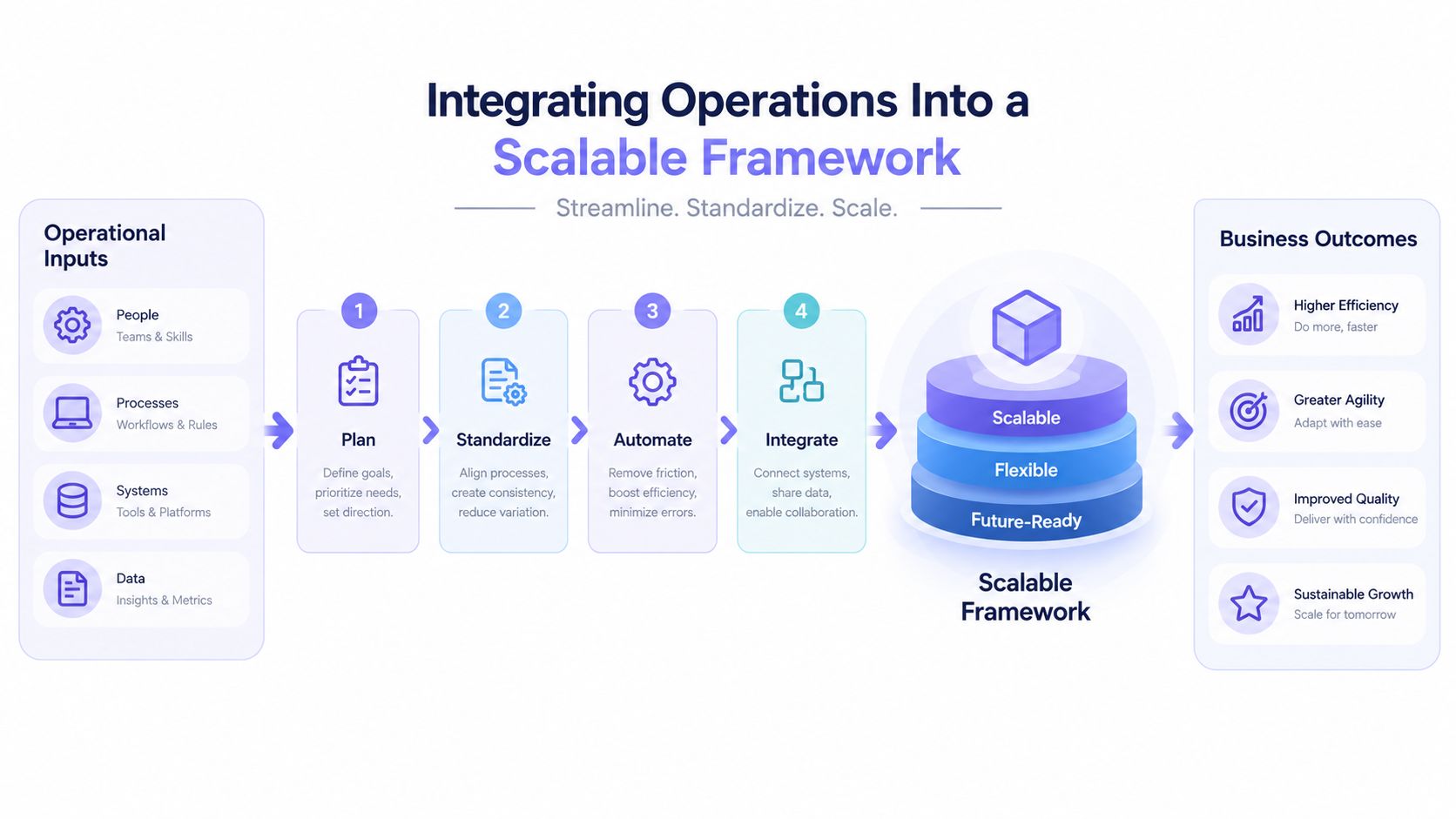
Growth exposes disconnected processes. A manager can run one property through personal knowledge and informal reminders, but a portfolio needs repeatable controls that another team member can understand and audit.
The operating framework should connect four records:
- Access record: Who has credentials, what permissions they hold, when access expires, and which entries occurred.
- Maintenance record: What failed, how urgently it was handled, who completed the work, and whether the repair held.
- Financial record: What the work or service cost, which property absorbed it, and how the expense compares with income.
- Resident-service record: What residents use, what support it creates, and whether it contributes to the property's operating objectives.
A monthly portfolio review can examine access incidents, credential changes, emergency work orders, callback trends, vendor share, expense per unit, income-share ratios, and resident-service usage. Property-level dashboards should preserve local detail, while portfolio-level reports should highlight repeat patterns and outliers.
Remote access administration is especially useful when properties have distributed staff or changing vendor schedules. Managers considering multifamily software for gate access should evaluate whether the platform can connect with the existing gate operator, support credential revocation, preserve audit logs, and give administrators a practical fallback when connectivity or hardware problems occur.
The implementation sequence should stay controlled:
- Document the current workflow.
- Remove duplicate entry and manual handoffs.
- Assign an owner to each metric.
- Pilot the change at one property or operating area.
- Review results against the original problem.
- Scale only after staff and residents can use the process reliably.
That discipline keeps technology, staffing, and amenities tied to operating outcomes. It also gives boards a clearer explanation for each investment, whether the decision is to automate access, add a technician, replace failing equipment, or decline a costly service.
Nimbio provides cellular, smartphone-controlled access for apartment gates and building entry, with remote credential management and access visibility that can fit into a broader operations program. Visit Nimbio to review how a retrofit approach can modernize access without replacing a functioning gate system.