An amenity fee is a mandatory charge separate from base rent, usually around $30 per month in residential properties, and some one-time packages can reach $500 for larger amenity bundles. It covers access to shared community features, including traditional perks like pools and gyms, plus modern services like smart access control and package systems.
A property manager sees the issue immediately. Residents want better amenities, owners want cleaner budgets, and the board wants a fee structure that holds up when someone asks why the charge exists at all.
Table of Contents
- Introduction Decoding the Amenity Fee
- What Amenity Fees Typically Cover
- How Amenity Fees Are Calculated and Billed
- The Rise of Smart Amenities and Proptech Fees
- Legal Considerations and Communicating Fees
- Best Practices for Managing Amenity Fees
Introduction Decoding the Amenity Fee
A property team usually runs into amenity fees when the base rent or dues no longer cover the cost of shared services. The fee is a separate line item used to fund access to common features, and it's typically treated as a mandatory charge rather than an optional upgrade, especially when the lease or community rules make access part of the package.
Practical rule: if residents can't opt out without losing access to a shared feature, the fee is being used as an operating tool, not a casual add-on.
Historically, amenity fees became more visible as apartment operators and hospitality providers began unbundling services from base pricing, so residents or guests pay only for the extras they use, such as pools, fitness centers, shuttle services, or premium common areas. That model made pricing look cleaner on the front end, but it also made fees more explicit on the back end, which is where HOA boards and managers feel the pressure.
The practical reason the fee exists is simple. Owners need to recover the cost of maintaining shared assets, and residents want those assets available, clean, insured, and working when needed.
For an HOA board, the hard part is deciding whether the charge is fair, defensible, and tied to real value. For a manager, the challenge is explaining why the community is paying separately for something that still feels like part of the living experience.
The answer changes as amenities change. A clubhouse and pool still matter, but so do digital services that residents now expect to work every day, like building-wide connectivity, secure package handling, and controlled entry systems. That shift matters because the definition of an amenity is no longer limited to leisure, it now includes infrastructure that supports daily living.
What Amenity Fees Typically Cover
Amenity fees usually cover access, availability, upkeep, and replacement costs for shared property features. In practice, that means the fee is tied to the system being usable, not just present on paper.
Traditional shared amenities
The older model still shows up in most communities. These are the features residents immediately recognize:
- Fitness spaces: Gym equipment, weights, cardio machines, and cleaning or maintenance tied to those rooms.
- Recreation areas: Pools, lounges, clubrooms, courtyards, rooftop spaces, and other common gathering areas.
- Operational support: Landscaping around shared areas, staffing for common spaces, utilities, and routine upkeep.
Modern services that now get bundled
The newer fee conversation is changing because technology has become part of the amenity package. Many communities now treat these as baseline features rather than luxury extras:
- Property-wide Wi‑Fi: Residents expect connectivity in common areas and, in some properties, throughout the building.
- Package systems: Secure lockers, package rooms, and delivery management tools.
- Access control: Digital entry systems, app-based gate access, and building-entry tools that support secure living.
- Shared work and lounge infrastructure: Coworking rooms, conferencing corners, and digitized resident spaces.
A useful distinction for boards is this, the fee should cover availability, not just usage. If a pool must be cleaned daily, a package room must remain secure, and access hardware must stay operational, then the cost exists whether one resident uses it every day or only occasionally.
The clearest way to think about the fee is as a revenue line dedicated to common assets. That keeps the base rent or dues more understandable, and it gives the property a cleaner way to fund features that residents expect to remain reliable.
apartment gate entry app is a good example of how modern communities now think about access as part of the amenity package rather than a separate afterthought.
How Amenity Fees Are Calculated and Billed
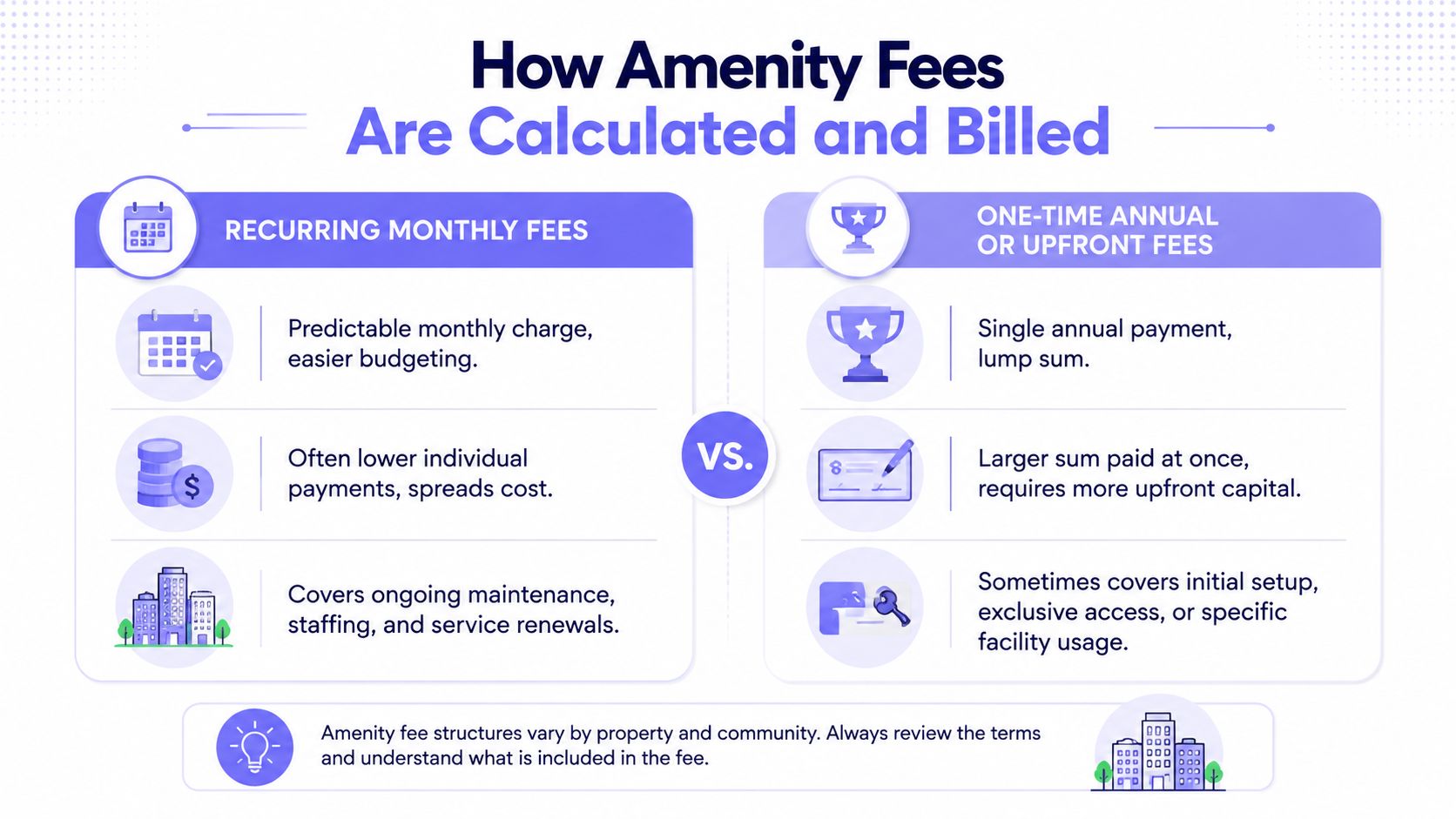
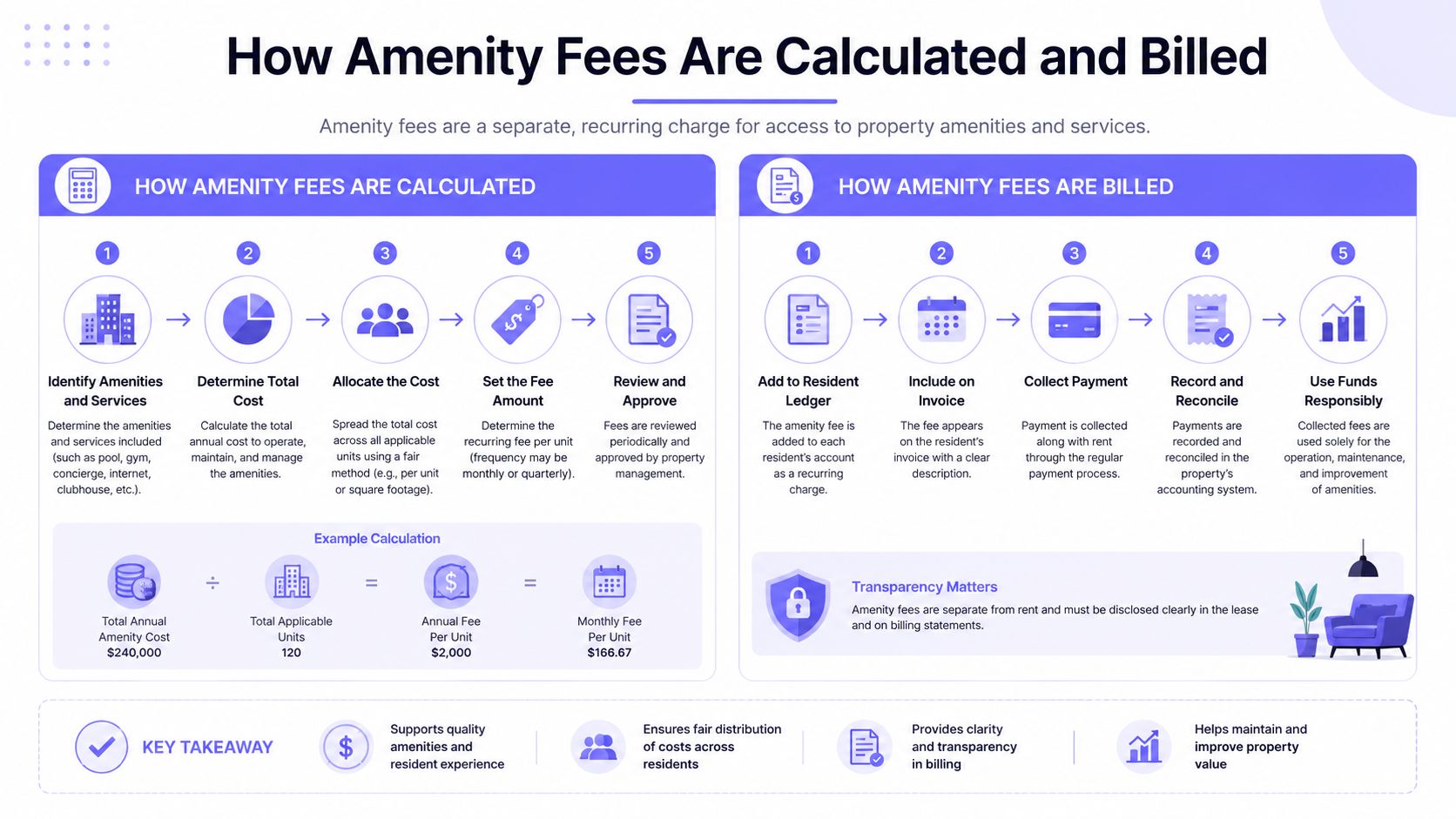
The billing model usually falls into two buckets, recurring monthly charges or a one-time upfront charge. The right choice depends on whether the amenity is a continuing operating expense or a larger access package that makes sense to fund at move-in.
The monthly model
Recurring fees are easier to budget because they spread cost over time. That's why many communities prefer them for services that require continuous staffing, cleaning, monitoring, or renewal.
A residential amenity fee commonly sits around $30 per month according to industry guides, and that adds $360 per year per unit. Some one-time fees can reach $500 for larger amenity packages, which makes them feel more like an access or setup charge than a monthly service fee. Those figures are useful because they show how a small monthly line item can turn into a meaningful annual amount, especially across a full community.
The upfront model
One-time charges work better when the community is funding initial setup, access configuration, or a broader amenity bundle. Residents usually like the simplicity of a single payment, but it can create friction at move-in if the value proposition hasn't been explained well.
For property teams, the key decision is not just how much to charge, but how to match the billing structure to the cost structure. A fee tied to a pool or clubhouse may feel different from one tied to a resident-facing technology platform that needs maintenance, support, and regular updates.
A useful resource for communities that want to think about packaging access and services more clearly is maximize vacation rental bookings, since the same pricing logic often shows up in how operators present bundled services.
Budget test: if the cost shows up every month, a recurring fee is usually easier to defend than a one-time charge that's supposed to cover ongoing operations.
managing gate access costs becomes important when communities start separating access infrastructure from general dues, because the pricing structure should match the actual operating burden.
The Rise of Smart Amenities and Proptech Fees
The definition of an amenity is changing because residents now treat digital infrastructure like part of everyday livability. That includes property-wide Wi‑Fi, package systems, and access control, which are increasingly viewed as core services rather than optional perks.
Why smart amenities change the fee conversation
A pool is easy to understand. A cloud-based access platform is different because it combines convenience, security, and ongoing operation in one system.
That matters for HOA boards and managers because the fee can be justified differently when the amenity supports daily building operations. A digital gate, for example, doesn't just open and close, it manages who gets in, when they get in, and how access is revoked when needed.
What residents actually value
Residents tend to notice the difference between old hardware and modern systems very quickly. Fobs get lost, clickers get copied, and keypad codes get shared too broadly, while app-based access can be managed more cleanly and reviewed remotely.
Cellular keyless entry is especially relevant because it doesn't depend on local Wi‑Fi stability. That means the system keeps working even when the property's internet hiccups, which is a major operational advantage for gated communities and multifamily sites that can't afford access failures at the front entrance.
A system like how cellular gate openers work fits the modern amenity conversation because it upgrades access without forcing a full rebuild of the gate infrastructure.
Why boards justify fees through proptech
Smart access systems are also easier to defend when they retrofit existing equipment. Hardware-agnostic technology reduces the need to replace every operator just to modernize resident experience, and that lowers the barrier to making the community feel current.
For managers, the primary value is remote control. Visitor credentials, access revocation, and auditability become easier to manage, which reduces manual work and makes access policy more consistent.
Legal Considerations and Communicating Fees
Amenity fees need to be disclosed clearly because they are separate from base rent or the room rate. In residential leasing, that separation matters both legally and operationally, since leases and booking terms usually list the fee as its own line item for clarity.
The cleanest way to communicate the fee is to treat it as a defined community charge, not a surprise surcharge. If the board or manager can't explain what the fee funds in plain language, residents will assume the worst.
A strong communication package should include:
- A plain-English fee description: State what the charge covers, such as shared facilities, building services, or digital access tools.
- A separate line in the lease or fee schedule: Keep the fee visible and easy to find.
- A list of included amenities: Spell out what residents are paying for so there's no confusion later.
- A reason for the charge: Tie the fee to upkeep, access, security, or replacement costs.
- A resident-facing explanation: Use move-in packets, board notices, or community memos to explain the value.
The most common mistake is bundling a new fee into a vague price increase. Residents are more likely to accept a separate fee when they understand the specific service behind it.
That's especially true in communities where buyers or renters are comparing properties. A useful reference point for presentation strategy is the real estate agent's HOA selling guide, because fee transparency often shapes how a property is perceived during sales and leasing conversations.
Clear disclosure doesn't remove pushback, but it does remove the impression that the board is hiding something.
For boards, the safest approach is consistency. Charge the fee in the same way, explain it the same way, and update residents before the next billing cycle whenever the structure changes.
Best Practices for Managing Amenity Fees
The best amenity fees are tied to real resident value, not just to whatever the property can get away with charging. That means the board should start with demand, not with the spreadsheet.
A practical checklist looks like this:
- Survey residents first: Ask which amenities they use and which ones they'd pay for.
- Match the fee to the service: Keep recurring fees tied to recurring operating costs.
- Prioritize security and convenience: Modern gate operator integration, access logging, and visitor management usually produce clearer value than cosmetic upgrades.
- Document the rationale: Keep internal notes on what the fee funds and why it exists.
- Review the package regularly: A fee that made sense two years ago may no longer fit the community's needs.
The strongest fees are also the easiest to explain. When residents can see that the money is supporting access, safety, maintenance, or a better daily experience, the conversation changes from resistance to value.
A weak fee structure does the opposite. It feels arbitrary, it creates friction at renewal, and it invites constant questions from owners who want proof that the charge is doing something useful.
Nimbio helps gated communities and property managers modernize access with cellular keyless entry that works without Wi‑Fi dependence, fits existing hardware, and supports remote visitor management. If your board is evaluating an amenity fee tied to smarter access control, visit Nimbio to see how a retrofit can strengthen security and make the fee easier to justify.