A property manager usually meets the problem first, not the technology. A delivery driver is waiting at the gate, a resident lost a clicker, or the same shared PIN has spread far beyond the people who should know it. A remote control gate company earns its keep by solving those access problems without turning a working gate into a construction project.
The useful companies in this space do more than sell metal and motors. They connect the gate operator you already have to authorization, audit trails, and safer remote opening methods, while still respecting the mechanical limits of the gate itself. That mix matters because a smart app alone doesn't make a gate compliant, and a heavy operator alone doesn't make access manageable.
Table of Contents
- Defining the Modern Remote Control Gate Company
- Core Services and the Case for Cellular Retrofits
- Evaluating Connectivity Options for Gate Operators
- Navigating Safety Codes and Entrapment Standards
- Modernizing Authorization and Audit Trails
- Questions to Ask Before Hiring an Access Control Vendor
Defining the Modern Remote Control Gate Company
A modern remote control gate company starts with the access problem on site, then works back to the hardware already installed. A property can have a solid operator, a keypad, and a pile of clickers, yet still be hard to manage when keys go missing or visitors arrive after office hours. The company's job is to make access easier to administer without disrupting the gate's physical function.
From gate hardware to access control
Older gate work centered on the operator, arm, hinges, and installation. That still matters, but stronger firms now treat the gate as one part of a wider access-control system. They handle how a resident, contractor, or visitor is identified, how access is approved, and how each opening is recorded.
Cellular retrofit approaches fit that job well. Nimbio is one example of this model, with an AI-ready gate access platform that connects over cellular LTE, wires into the operator a property already has, and keeps existing remotes and keypads working alongside the app. It also lets managers issue and revoke digital keys remotely, set expiration dates, and let visitors request entry with video verification through the gate-side workflow.
The practical point is simple. A property does not always need a new gate to improve control. It often needs a better way to manage the gate that is already there.
Practical rule: if a vendor only talks about the gate leaf and motor, but not identities, permissions, logging, and emergency access, the offer is incomplete.
What a serious provider should understand
A serious provider has to understand both the electrical side and the policy side. The electrical side includes operator compatibility, power behavior, and signaling. The policy side includes who should be allowed in, for how long, and how administrators revoke access when circumstances change.
That distinction is easy to miss when the sales pitch focuses only on convenience. A gate that opens from a phone still needs careful administration, especially in communities where multiple stakeholders share responsibility. For a board or manager, the right question is whether the company can support the full access model the property needs.
Core Services and the Case for Cellular Retrofits
A gate upgrade often starts with a board trying to fix access control without creating a construction project. The hardware may still work, but the way people get in, get approved, and get logged may be outdated.
Retrofit instead of replacement
A hardware-agnostic cellular controller for retrofitting legacy gate operators is often the practical upgrade path. It connects to the operator already on site, so the property keeps the gate, keypad, and remotes while adding smartphone-based control. That approach fits properties where the gate structure is sound, but the access process no longer meets current needs.
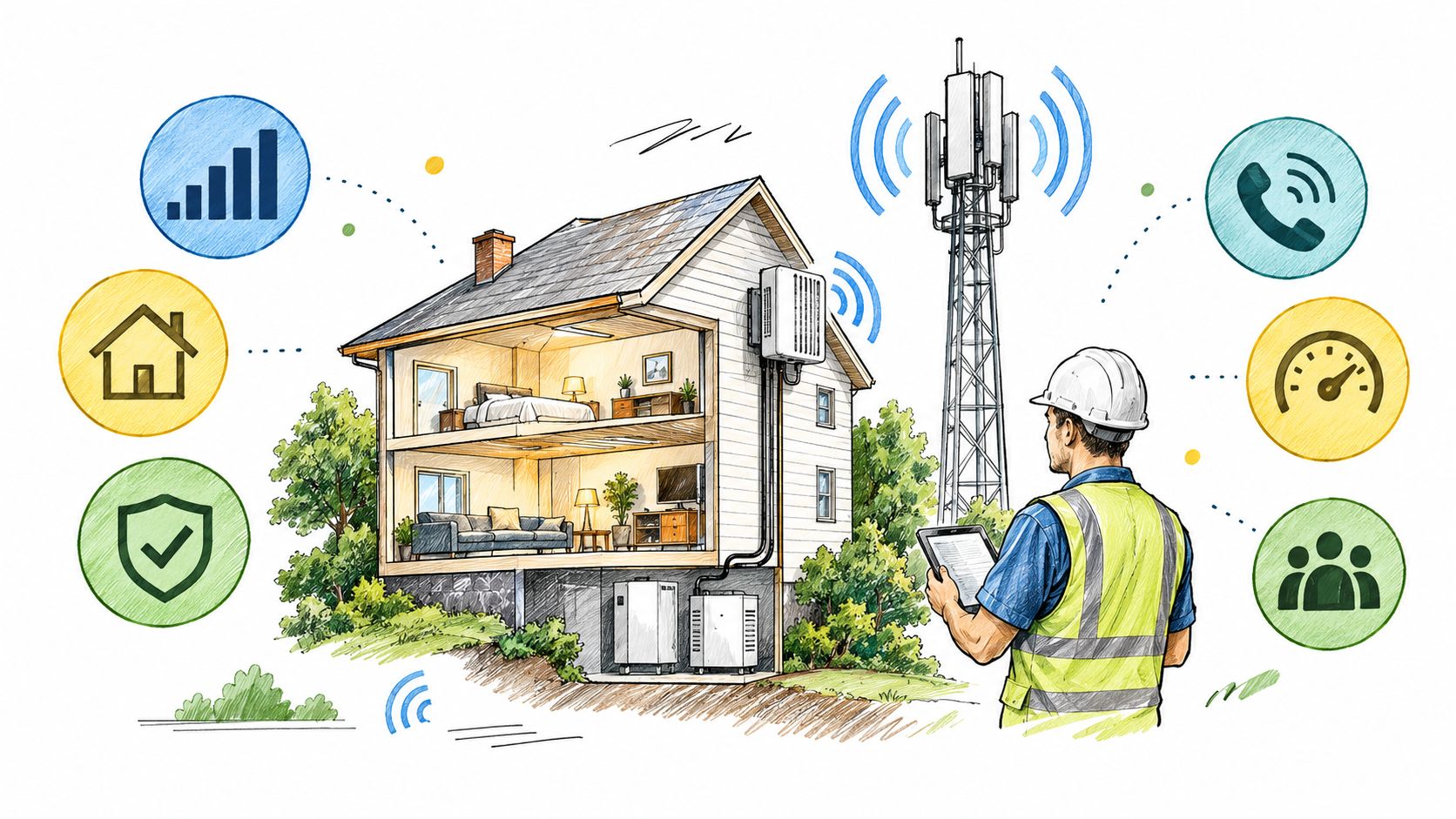
With Nimbio, the retrofit uses cellular LTE, so the system does not depend on Wi-Fi at the gate. Existing clickers, fobs, and keypads keep working, which avoids forcing residents into a single new method all at once. For an HOA board, that usually creates less disruption than replacing the full entrance just to modernize access control.
A retrofit makes sense when the goal is better administration, not a brand-new gate.
What the service package should include
A capable provider should be able to handle installation and commissioning so the controller communicates correctly with the operator. It should also provide maintenance support, since operators, sensors, and relays still wear out over time.
The access layer matters too. Credential administration should cover issuing, expiring, and revoking access, along with visitor handling for deliveries or guests that need remote approval. Logging and review should also be part of the service, so managers can see what happened and when.
Those functions matter more than polished app screens. A gate system that cannot be managed cleanly becomes harder to trust, especially when several people share responsibility for access.
Evaluating Connectivity Options for Gate Operators
Connectivity choices look simple on paper, but the trade-offs show up in the field. A gate sits outdoors, often at the edge of a property, where network coverage, power routing, and service access all become real constraints. The right choice depends on the site, not on whichever connection sounds newest.
Wi-Fi, Ethernet, and cellular in the real world
Wi-Fi works best when the property already has strong coverage at the gate and a dependable network nearby. Its weakness is obvious on larger sites, long driveways, and entrances far from the main building. It also depends on a local router and the health of that local network.
Hardwired Ethernet is usually the most predictable once it's in place. The problem is the installation burden, since the gate may need trenching, conduit, and more labor to get a cable where it needs to go. That can make sense on new builds or major remodels, but it's often overkill for an existing entrance that only needs remote access.
Cellular LTE changes the equation by removing the need for local network infrastructure at the gate. It still depends on carrier service and device power, so it's not magic, but it avoids relying on a resident's router or the property's Wi-Fi footprint. That's why many retrofit projects lean toward cellular when the site is already built out.
| Gate Connectivity Methods Compared | Installation Effort | Reliability Risks | Infrastructure Needed |
|---|---|---|---|
| Wi-Fi | Moderate if coverage already reaches the gate | Router issues, weak signal, local network outages | Nearby access point and stable property network |
| Hardwired Ethernet | Higher because of trenching or cable routing | Cable damage, switch failure, construction complexity | Physical network run to the gate |
| Cellular LTE | Lower when a retrofit is the goal | Carrier congestion, SIM or subscription issues, power loss | Cellular coverage and a powered controller |
Build for failure, not for perfection
A good plan assumes outages can happen. That means local manual controls, backup power where appropriate, and a documented process for when the network fails. It also means deciding who responds first when a gate stops accepting remote commands.
Operational test: if the connection drops, the property should still know how people get in, who responds, and how the event gets documented.
A site that depends on remote control needs continuity planning, not just a signal.
Navigating Safety Codes and Entrapment Standards
Digital access can't override physical safety. That's the point many buyers miss when they focus on the app and ignore the operator. A remote command is just a way to request movement, and the gate still has to satisfy the safety rules that govern how it moves.
UL 325 still governs the gate
Under UL 325, vehicular gate operators must provide at least two independent entrapment-protection methods for each entrapment zone, and the operator must not run until the required protective devices are installed and enabled. If a monitored device fails, the operator must restrict movement to constant-pressure control for the affected movement instead of continuing normal automatic operation. The detailed requirements are laid out in the DASMA summary of the standard, which is the right place to start when a board is evaluating a gate upgrade: UL 325 entrapment protection requirements.
That matters because a phone app doesn't replace sensors. A cellular controller can open the gate remotely, but it doesn't erase the need for photoelectric devices, sensing edges, or the correct protection method for the gate type and entrapment zone.
Egress has separate rules
For pedestrian doors and other egress openings, NFPA 101 puts timing and force limits around delayed-egress electrical locking systems. The system must release within the required time after the release action, and the exit path can't be blocked by the access-control design. The code also requires a sensor on the egress side in the described configuration, plus automatic release of the lock if power is lost to the sensor or the electrically locking portion of the system: NFPA 101 delayed-egress provisions.
That distinction matters for properties that combine gates with pedestrian access points. A system can be well designed for entry control and still fail if it interferes with emergency exit. Local code officials may interpret requirements differently, so the authority having jurisdiction needs to review the final design.
A remote opener is an access tool. It is not a substitute for life-safety hardware.
Modernizing Authorization and Audit Trails
A gate upgrade usually fails at the permission layer before it fails at the hardware. Shared codes are simple to hand out, but they are hard to revoke cleanly and hard to tie to a single person. Individual digital credentials take more setup, yet they let the board control who can open a gate, when they can open it, and whether that access should end after a project, move-in, or service call.
Authentication is not authorization
NIST separates authentication from authorization, and that distinction matters in gate work. Authentication proves a user controls a valid authenticator. Authorization decides whether that user may open a specific gate, at a specific time, for a specific reason. The NIST guidance on digital identity and access control makes that separation clear: NIST SP 800-63B.
A good gate platform should ask more than whether someone is logged in. It should verify whether the person is allowed to open that gate right now, based on role, time window, and revocation status. That is the practical difference between a credential that exists and one that should still work.
Audit trails need enough detail to be useful
A production-grade gate controller should record the requesting identity or credential, the gate or device involved, the command type, the timestamp, the authorization result, and the controller response. NIST also treats audit and log records as part of access-control operations, not an optional extra, as outlined in the NIST NCCoE access-control guidance and summarized in our overview of access logs and audit trail.
That level of logging helps managers separate an approved opening from a failed command, a forced entry, or an equipment fault. It also makes temporary contractor access and delivery windows easier to administer without handing out the same code to everyone. For managers comparing installed access control systems, PeakFriend Security's overview of installed access control systems is useful background on how fixed-site permissions and logged access fit together.
Nimbio fits that model by letting administrators issue and revoke digital keys remotely, set expiration dates, and review entry activity from a cellular-managed system. The important part is not the brand name. It is the administration model, because better gate control gives property staff a clearer record of who got in and why.
Questions to Ask Before Hiring an Access Control Vendor
A vendor interview should feel less like a sales presentation and more like a field review. The board or manager needs to understand how the system behaves when things go wrong, not only how it works on a perfect day. The right questions force the vendor to talk about safety, support, and long-term ownership.
Ask about emergency behavior first
Before anything else, ask what happens during a power loss, a cellular outage, or a controller failure. Ask whether the gate stays closed, opens, or changes behavior depending on the operator model. Ask who maintains any fire-department override and whether the site needs hardware such as a Knox key switch or emergency radio receiver, since local rules vary.
The HOA guidance on gate maintenance notes that automatic gates generally need two anti-entrapment protections under UL 325, and that local jurisdictions may require emergency hardware or specific fail behavior during outages: HOA gate maintenance guidance. That's why a vendor should be able to explain the override path in plain language, not just point to the app.
Ask about upkeep, privacy, and compatibility
The next questions should cover firmware updates, credential revocation, data retention, and hardware compatibility. If the vendor talks only about the onboarding process and not the lifecycle, the board is taking on avoidable risk. A gate system outlives one manager, one board, and often one installer.
For a practical comparison of access-control practices that also applies to small businesses, IT Cloud Global's guide to access control for SMBs can help frame the questions around permissions and administrative responsibility. The same logic applies at a property gate: know who can grant access, who can remove it, and how fast that change takes effect.
Use this checklist in the vendor meeting:
- Emergency access: What happens during outage, lock failure, or network loss?
- Code compliance: Which parts of UL 325 and local fire requirements does the system satisfy?
- Signal survey: Will the vendor test cellular coverage at the gate before install?
- Physical zones: How will the installer verify each entrapment zone and protective device?
- Logs and privacy: What is recorded, who can see it, and how long is it retained?
- Lifecycle support: How are firmware updates, device replacement, and administrator turnover handled?
A vendor that can answer those points clearly is probably thinking like an operator, not just a seller.
If the property needs a cellular retrofit that preserves existing gate hardware while adding remote credentials, audit trails, and visitor handling, Nimbio is one option to review.