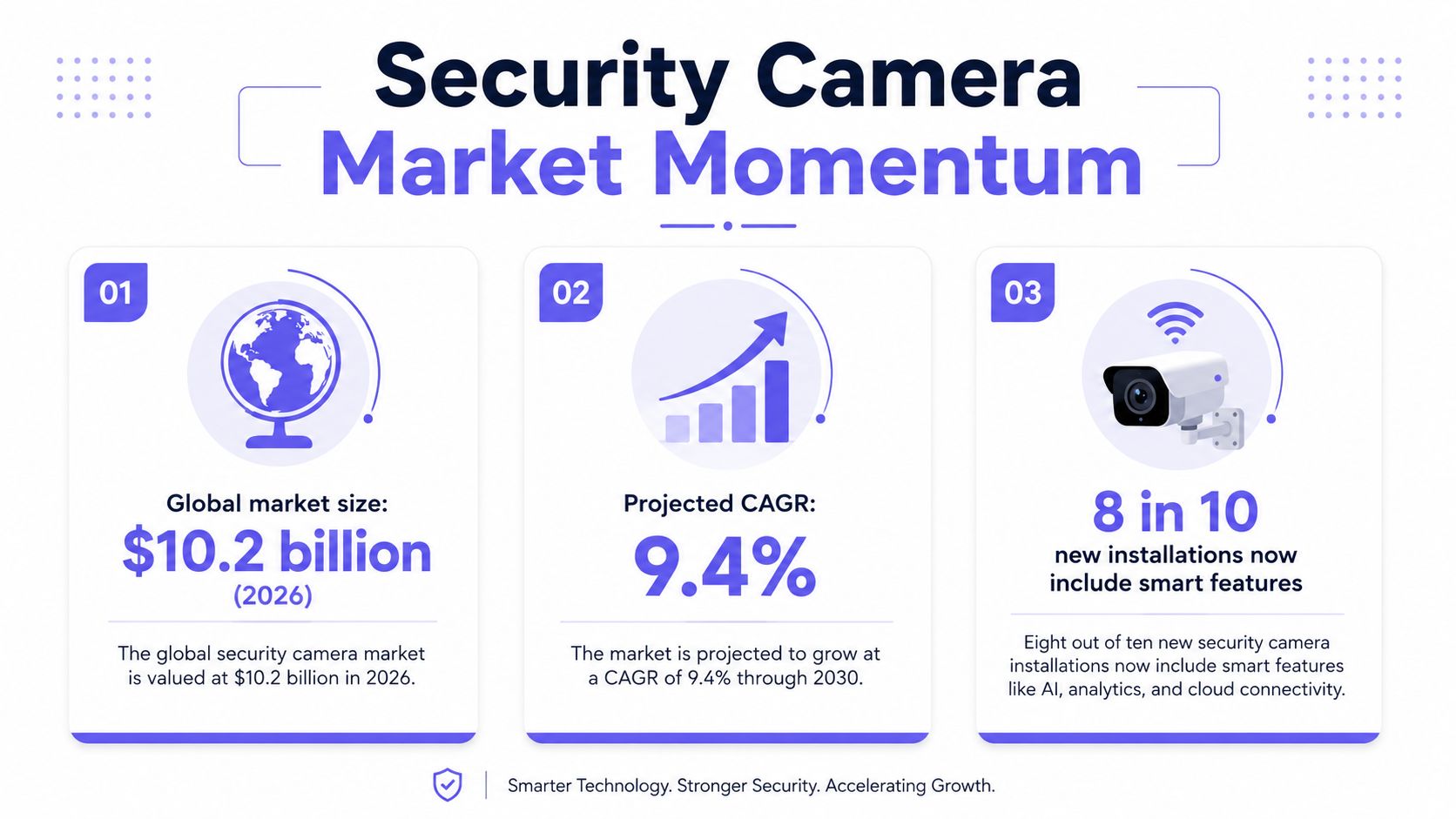
$32.4 billion in 2025, growing toward $68.7 billion by 2034, is the kind of market size that makes a security camera installation business worth starting now, not later. The opportunity is real because buyers aren't just shopping for cameras, they're paying for planning, cabling, configuration, testing, and the access control layers that sit beside surveillance.
Table of Contents
- Why Now Is the Right Time to Enter the Security Camera Installation Market
- Legal Requirements, Insurance, and Licensing for Your Installation Business
- Essential Tools, Inventory, and Equipment for a Professional Installation Operation
- Service Offerings and Pricing Models That Drive Real Profit Margins
- Sales and Marketing Strategies for HOAs, Property Managers, and Commercial Clients
- Hiring and Training Installers for Quality, Repeatable Installations
- Building Recurring Revenue Through Monitoring and Access Control Integration
Why Now Is the Right Time to Enter the Security Camera Installation Market
One report values the global CCTV installation services market at $32.4 billion in 2025 and projects $68.7 billion by 2034, with an 8.7% CAGR over that period DataIntelo. That kind of growth creates room for new installers, but opportunity sits in how the work is structured.
The commercial side matters most. The same report says the commercial segment accounted for 38.2% of global revenue in 2025 DataIntelo. Commercial buyers do not just want cameras mounted. They want planning, clean cabling, reliable coverage, documented handoff, and a vendor who can support the system after the install.
Residential demand is mainstream, not experimental
Installed surveillance is already normal household spending. In the United States, installed surveillance cameras grew from 47 million in 2015 to 70 million in 2018, which is nearly 50% growth in three years CCTV Security Pros.
A separate market summary says 61% of U.S. households had at least one security camera in 2026, up from 52% in 2024, or about 74.9 million homes CCTV Security Pros. That is a mature category, and mature categories still need installers who can do the job right.
Commercial work is the better business
Commercial projects usually bring more cameras, more cabling, more testing, and more troubleshooting. They also tend to expand into structured cabling, access points, access control, and maintenance. That mix is where recurring revenue starts to matter.
The best operators treat the camera install as the entry point to a broader low-voltage integration business. Access control, especially cellular retrofit paths like Nimbio, gives you a cleaner recurring model than one-off camera sales alone. That is the difference between a shop that stays busy and a shop that compounds value.
Practical rule: treat residential jobs as volume, but treat commercial jobs as infrastructure.
Acquisition strategy matters early too. A buyer who wants to enter the space should review GoSBA Loans acquisition guidance before chasing equipment deals, because buying an existing installation book can be faster than starting from zero.
Legal Requirements, Insurance, and Licensing for Your Installation Business
A security camera installation business can lose jobs before the first site walk if the paperwork is weak. Get the licenses and insurance in place before you quote paid work, because commercial clients ask for credentials early and they do not wait around for cleanup later.
Licensing is local, so verify it before selling
State and local rules vary, and the exact license can depend on whether the work is treated as low-voltage electrical, contractor work, or both. Business registration starts the process, but it does not authorize the work by itself.
A new operator should check for:
- Low-voltage licensing requirements in the state and city.
- Contractor registration for commercial installations.
- Permit rules for drilling, exterior mounting, and building penetrations.
- Local alarm or security system endorsements if the jurisdiction treats the work that way.
Some states draw the line clearly. In Texas, for example, low-voltage work tied to security systems can trigger licensing rules that go beyond a basic business filing, so an installer needs to verify the state board requirements before taking commercial jobs.
Commercial and municipal buyers often ask for proof before they sign. Small installers usually run into trouble here, because they can do the work but cannot show the authority to do it.
Insurance is not optional
General liability covers property damage and on-site mishaps. Professional liability matters when a system is designed badly, configured poorly, or fails to cover the intended area.
Workers compensation becomes necessary the moment a team starts climbing ladders, pulling cable, and drilling into occupied buildings. For commercial work, the policy stack should match real jobsite risk, not a hobby side business.
If you are building a business that will hold customer relationships and recurring service accounts, structure the ownership cleanly too. A partner dispute can stall growth faster than a bad install, so review Lerner & Weiss APC buy sell and have local counsel adapt the agreement to the company.
Keep the paperwork boring and complete. Property managers, HOAs, and municipalities approve the installers who can hand over licenses, insurance, and contracts without a week of back-and-forth.
A simple compliance checklist starts with business registration, required licenses, general liability, professional liability, workers comp, and a contract template that spells out scope, change orders, testing, and warranty boundaries. It also helps to separate the camera job from the rest of the low-voltage stack, because access control and cellular retrofit work can carry different approval requirements. That matters if you want the installation business to grow into a platform, not stay trapped as a one-time camera vendor. See the 2026 video surveillance update for the direction customers are already moving in.
Essential Tools, Inventory, and Equipment for a Professional Installation Operation
The right tool kit keeps the business from looking amateurish on the first site walk. A professional installation operation needs more than drills and ladders, it needs a system for testing, documenting, and proving that each camera works as promised.
Buy for installation quality first
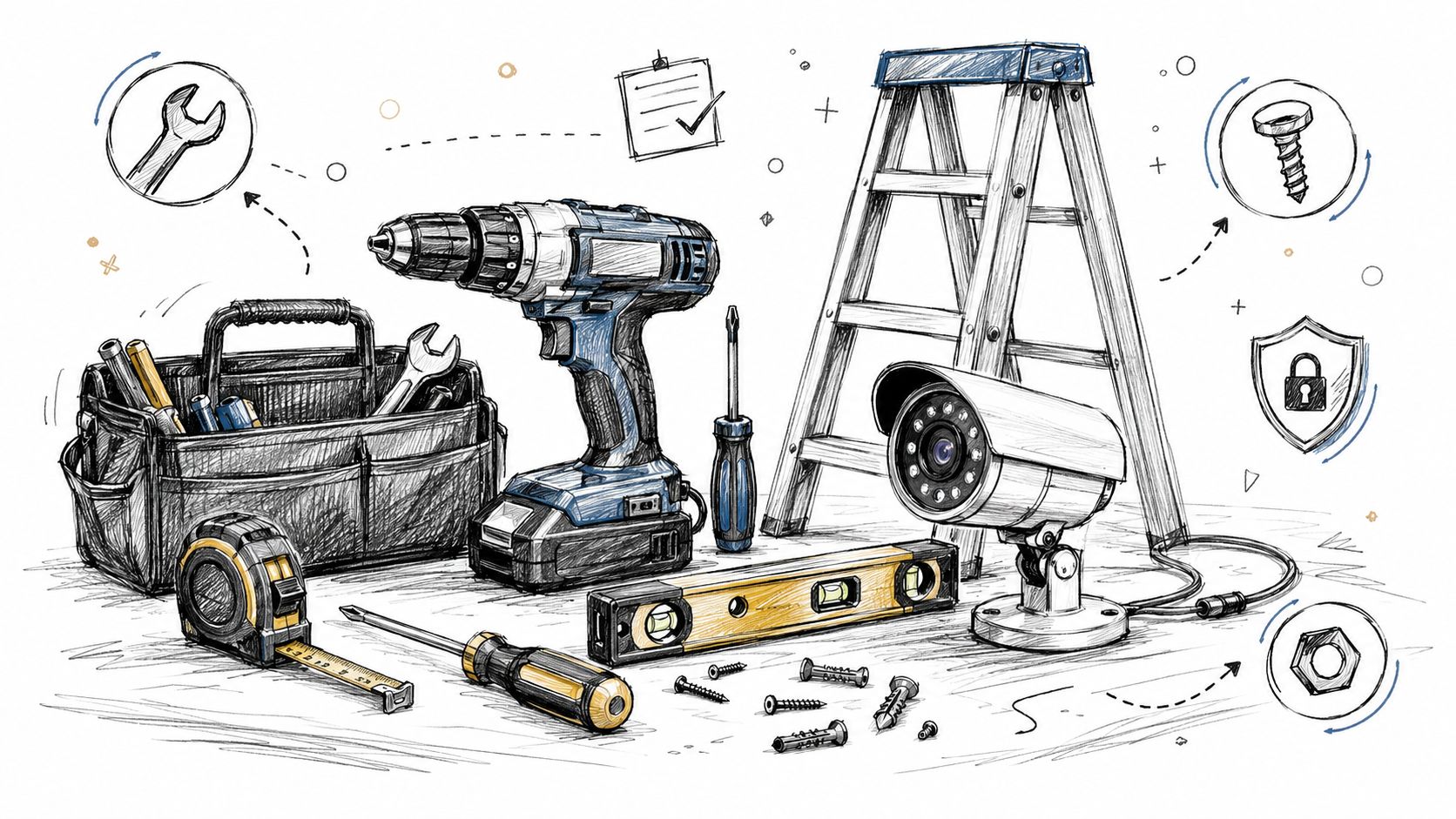
The essentials are cable testers, punch-down tools, cable pulls, ladder systems, labels, and mounting hardware matched to the substrate. Brick, stucco, metal, concrete, and drywall all need different anchors and seals, and guessing here creates callbacks.
A serious crew also needs:
- Cable testers for copper verification and continuity checks.
- Punch-down tools for terminations and patch panels.
- Ladder and access gear that's stable enough for exterior work.
- Weather-rated mounting hardware for outdoor cameras.
- Structured labeling supplies for ports, cables, and devices.
Stock cameras, but don't let hardware become the business
The common camera mix includes dome, bullet, PTZ, and AI-enabled analytics cameras. The smarter move is to stock the models used most often, then order specialty hardware as needed for unusual sites.
That approach keeps cash from getting trapped in shelf inventory. It also prevents the installer from becoming a warehouse operator with a van.
Network gear is where commercial projects bite
For IP-based systems, pressure often sits in the network stack, not the camera count. PoE switches, VLAN-capable routers, and structured cabling can consume more budget than the cameras themselves on complex jobs.
A leaner shop can use a drop-ship model for camera bodies and maintain a small on-hand inventory for mounts, enclosures, switches, and cable. A larger shop may carry more inventory, but it should still track each SKU against actual project demand.
For a current cloud surveillance reference point, a useful internal read is the 2026 video surveillance update, especially for teams deciding how much to commit to cloud versus local storage.
Service Offerings and Pricing Models That Drive Real Profit Margins
Camera hardware does not carry the margin. The margin lives in labor, coordination, troubleshooting, and the ability to sell the install as a managed low-voltage project instead of a box sale.
Package the job, don't itemize yourself into a commodity
A small business IP system with 5 to 10 cameras generally lands between $5,000 and $25,000 installed Reolink. Another commercial guide points to the same range and ties pricing to camera count and network complexity, which is the right way to think about the job.
That should change how the quote gets built.
- Site survey fee: charge for the visit and the coverage plan.
- Installation package: bundle labor, hardware, configuration, and testing.
- Commissioning fee: include sign-off, documentation, and handoff.
- Recurring support: separate maintenance and monitoring from the install.
The quote should make the customer compare outcomes, not camera model numbers.
Commercial pricing scales with site size
A 2026 cost guide says small businesses under 5,000 sq ft usually need 4 to 12 cameras and spend $1,500-$15,000, while enterprise complexes over 100,000 sq ft may need 40 to 150+ cameras and spend $15,000-$200,000+ Militia Protection. The same guide says installation alone often represents 30-40% of total project costs Militia Protection.
That is the margin story. Labor, coordination, ladder time, and troubleshooting drive profit, not the camera box.
Focus on sites with repeat pain
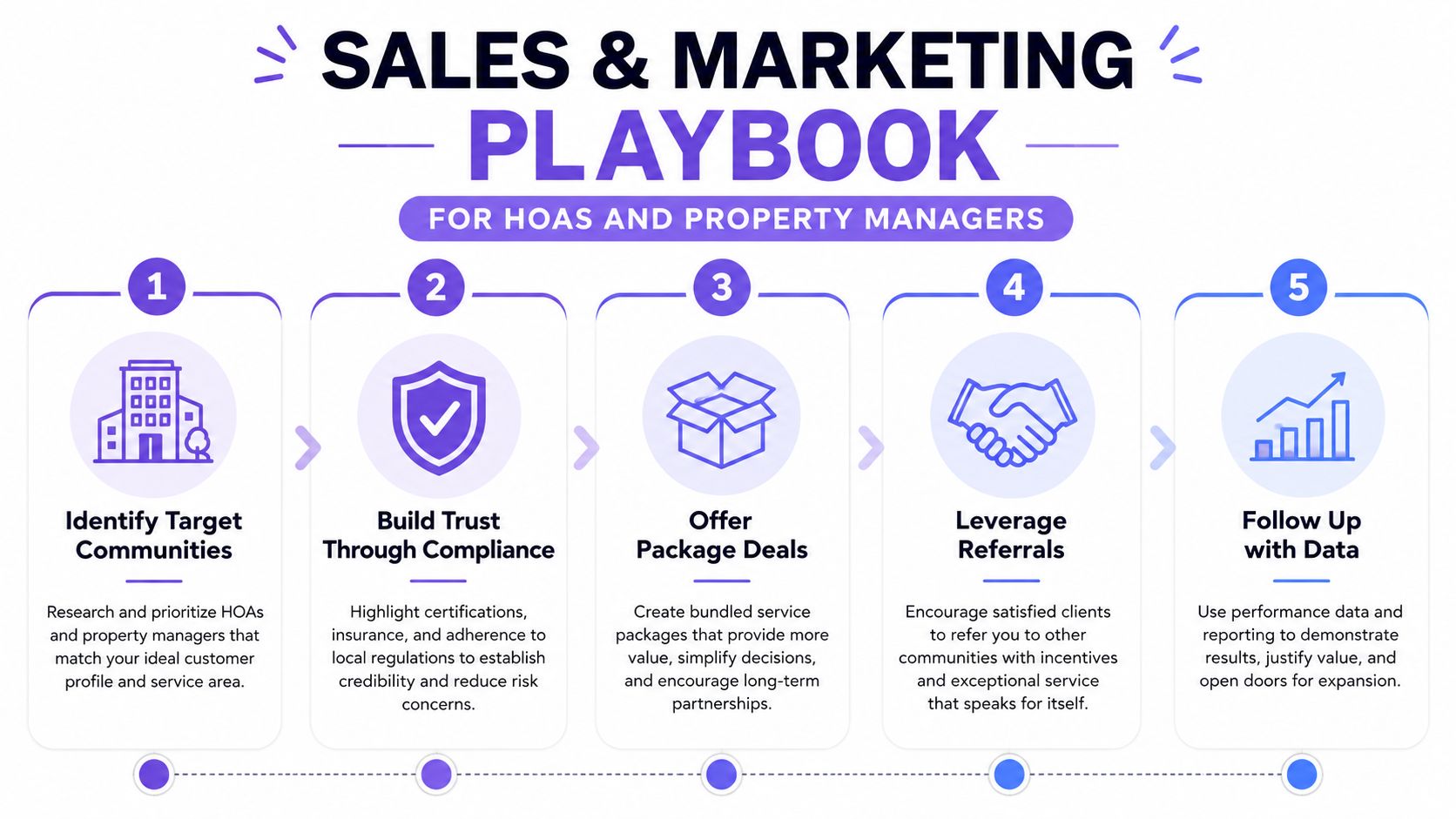
HOAs, property managers, and gated communities are stronger targets than random one-off consumers. Those buyers live with access confusion, blind spots, and constant complaints, which makes them receptive to paid surveys, bundled service, and upgrade paths tied to gates and entry systems.
The best installers sell certainty. They show where coverage is weak, document it, and then price the fix like a professional, not a retail reseller. That same mindset creates the path into recurring work, especially when access control becomes part of the conversation. For gate-heavy properties, it makes sense to replace key fobs for gated communities, because access problems often lead directly to the camera project.
Sales and Marketing Strategies for HOAs, Property Managers, and Commercial Clients
A security camera installation business wins better work by selling risk reduction and operations support, not hardware. Property managers care about access control headaches, resident complaints, and liability. Camera specs sit lower on the list.
Lead with the pain they already feel
HOAs and gated communities usually feel the problem in the gate lane first. Outdated pin pads, shared codes that cannot be tracked, and access issues create daily friction that boards hear about immediately. Commercial property managers care about lost footage, missed deliveries, and maintenance problems that were never documented properly.
The outreach should be specific:
- For HOAs: focus on resident access, audit trails, and fewer gate disputes.
- For multifamily: focus on controlled visitor entry and fewer support tickets.
- For commercial sites: focus on coverage gaps, after-hours activity, and maintenance discipline.
A useful expansion for gate-heavy communities is to replace key fobs for gated communities. Access problems often lead straight into the camera project, and that opens the door to recurring work around entry control, service calls, and resident support.
Sell the survey before the system
Generic advice about mounting cameras at entrances is weak sales material. Buyers need a site survey that maps transition zones, loading docks, side-service entrances, and structural obstructions before equipment gets ordered.
The installers who win this work usually do three things well:
- Map the site traffic. They walk the property at different times and note where people move.
- Separate deterrence from identification. They do not confuse wide coverage with usable facial detail.
- Document blind spots early. They show the buyer the problem before final pricing.
That survey is the differentiator. It proves the installer understands the site instead of just the camera catalog.
Use referrals, but don't depend on them
Referral business matters in property management, but it cannot be the whole pipeline. The smarter play is a repeatable prospect list of HOA boards, management companies, and commercial facilities that already deal with access control frustration.
There is also a better angle for follow-on revenue. Once you are already in the conversation, the systems that tie cameras to gate access and resident entry are easier to sell than another isolated camera package. That is why the sales message should stay close to operations, complaints, and the daily friction of managing people, not just recording them.
Hiring and Training Installers for Quality, Repeatable Installations
Hiring for a security camera installation business is not about finding people who can mount a camera straight. It's about finding techs who can think through network behavior, coverage, and commissioning without creating support debt.
Hire for network discipline, not just ladder comfort
The strongest installers understand IP addressing, VLAN segmentation, PoE switch capacity, and cloud system setup. They know that a camera can look fine physically and still fail because the network wasn't validated properly.
Training should cover:
- Coverage mapping before drilling any holes.
- Cable labeling so later service calls don't turn into guessing games.
- Day and night verification on every camera.
- Playback checks on recent footage before sign-off.
- Port and device documentation for every job.
If a tech can't explain why a camera is on a specific switch port, the install isn't finished.
Put testing discipline into the standard process
Poor testing causes expensive callbacks. A commercial install should not be closed until the crew has checked each camera in daylight and at night, confirmed playback from recent footage, and logged the camera, IP address, and port assignment.
That sounds basic because it is basic. The difference is that profitable firms enforce it every time.
Employees and subcontractors solve different problems
Employees give tighter quality control and cleaner documentation. Subcontractors can add capacity quickly, but only if the company already has a strong scope, checklist, and sign-off process.
For a growing firm, the best model is usually a small core employee team with vetted subs for overflow. That keeps standards tight while still letting the business take larger commercial jobs without missing deadlines.
A good training program also teaches technicians how camera work connects to service retention. Every neat install, every clean handoff, and every documented fix lowers support friction and makes recurring service easier to sell later.
Building Recurring Revenue Through Monitoring and Access Control Integration
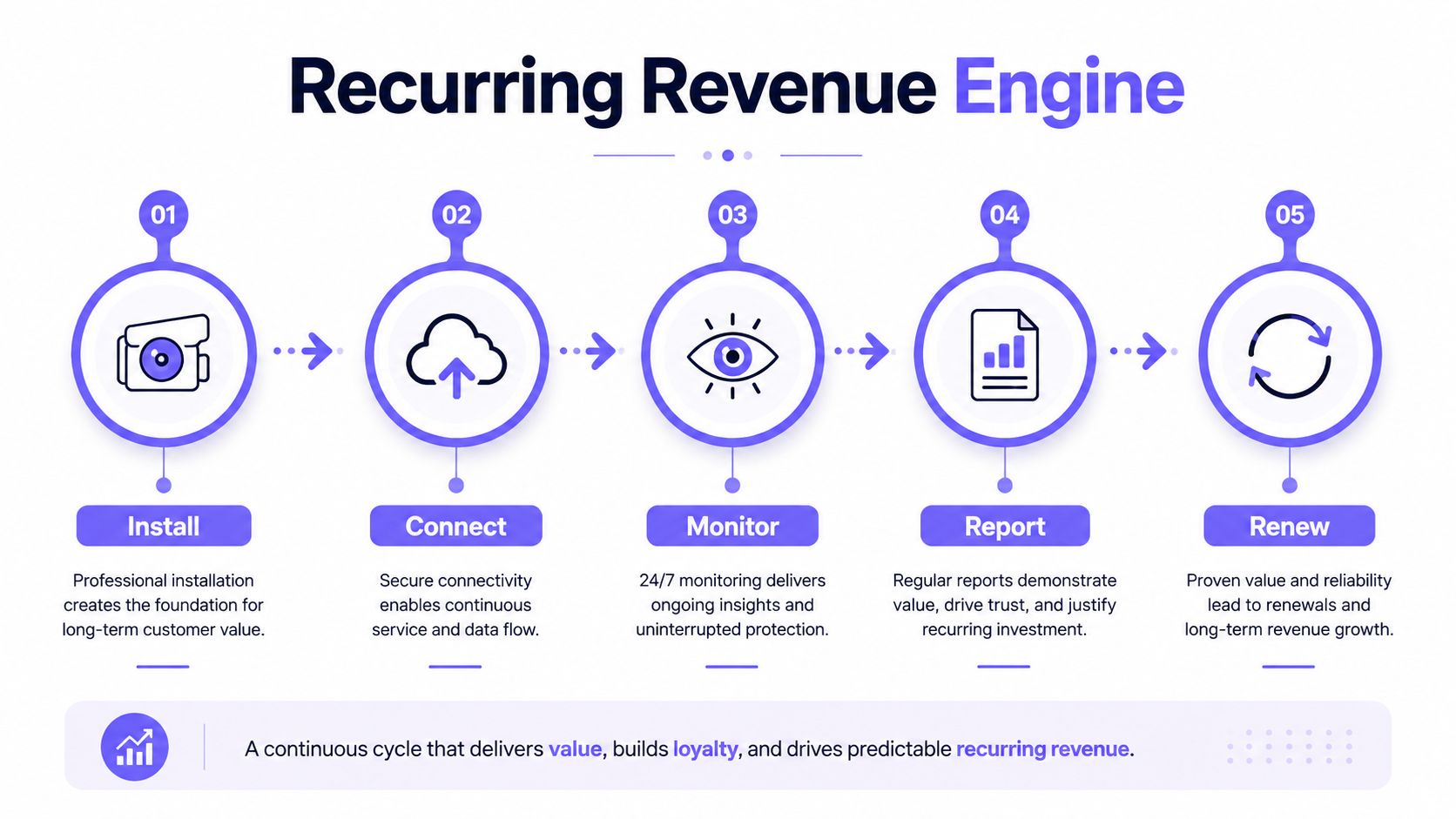
Recurring revenue is what turns a security camera installation business from a project-based shop into a real asset. Installations open the door, but monitoring, maintenance, firmware updates, and access control keep the account alive after the crew leaves site.
Reframe the business as an integration firm
Security camera installers are low-voltage integration firms. BizBite describes them as teams that design, install, service, and monitor video surveillance, door access, intercom, and low-voltage security systems for schools, municipalities, offices, apartments, manufacturers, and retailers BizBite.
That broader identity changes how you sell. Once a crew is already inside the camera infrastructure, access control belongs in the same conversation because the customer already has the site, the wiring, and the need for better control.
Sell recurring services separately
Recurring revenue should come from clear line items:
- Monitoring agreements tied to active systems.
- Maintenance contracts for inspections and troubleshooting.
- Firmware update subscriptions for supported devices.
- Cloud storage fees for customers who want offsite retention.
Price those services separately from installation. If you bury them inside the install quote, the recurring value gets harder to see and renewals become harder to manage.
Access control is the best upsell path
A gate or building entry project usually exposes the same problems as surveillance, poor visibility, weak accountability, and messy shared credentials. Cellular keyless entry retrofits solve that without forcing a full operator replacement.
A platform like Nimbio fits that model because it uses cellular connectivity, so there is no dependence on Wi-Fi drops. It is also hardware-agnostic, which means existing gates can often stay in place, and it adds remote visitor management so property teams can handle access without standing at the panel. See Nimbio access control setup for how it fits into existing camera infrastructure.
The profit stack matters more than camera count
The best accounts are built in layers. The installer wins the site survey, sells the camera project, adds maintenance, and then extends into access control and visitor management on the same property. Each layer deepens the relationship and makes the account harder to displace.
Nimbio gives security installers a direct path beyond cameras and into access control that stays on the books. It retrofits existing gates, runs on cellular connectivity, and lets property managers handle visitor access from a smartphone without replacing good hardware. Visit Nimbio to see how a stronger gate and access layer can turn more camera jobs into long-term recurring accounts.