A staffed apartment complex concierge looks polished from the lobby. In practice, the desk is either a control point that keeps a building moving, or a very expensive place where packages, vendors, residents, and after-hours problems all collide at once.
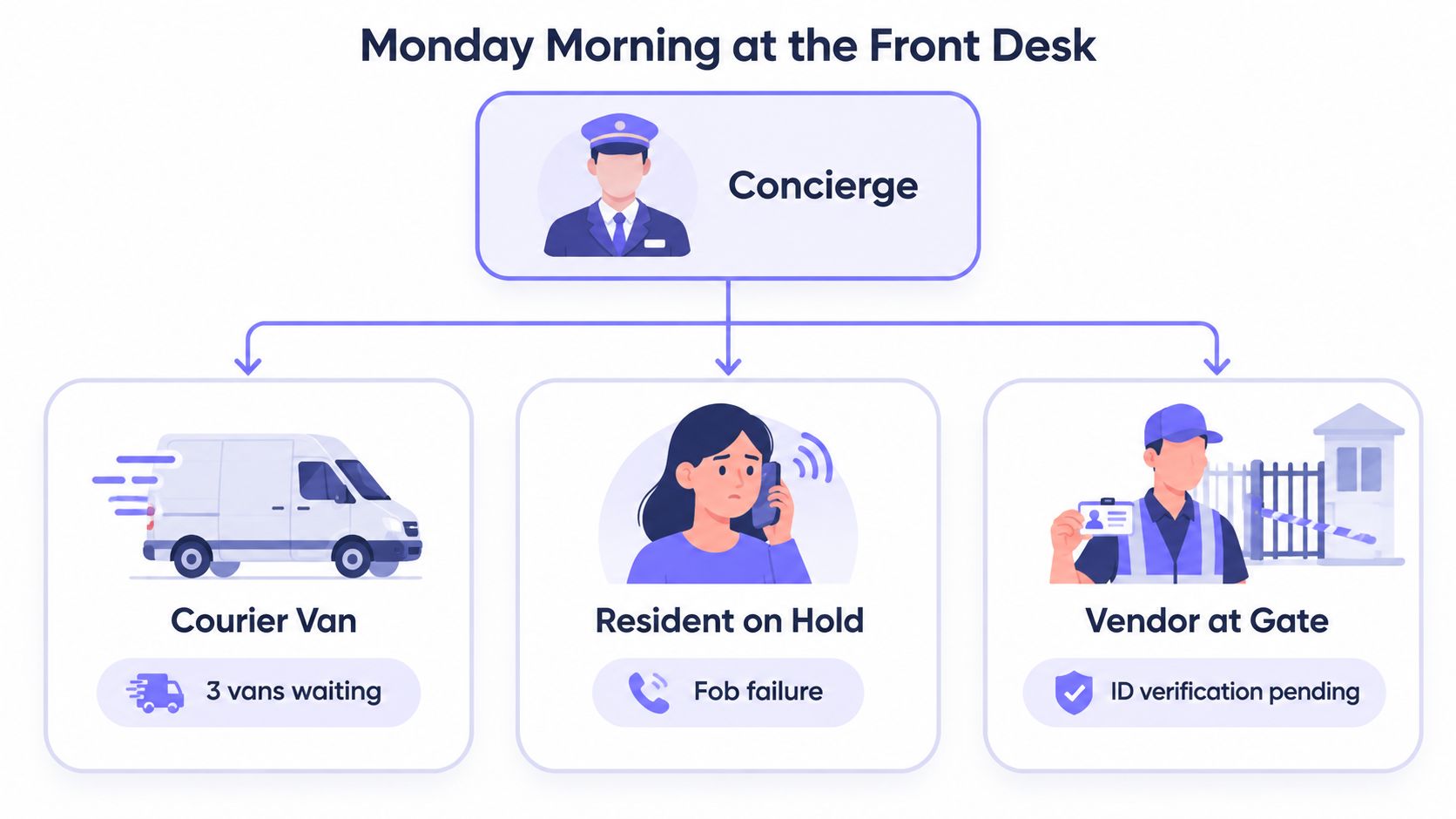
Property teams usually feel that difference on a Monday morning. Courier vans stack up at the loading zone, a resident is locked out after a fob failure, a vendor is waiting at the gate, and a move-in issue for unit 412 is already overdue. The right answer isn't to romanticize the desk, it's to decide which tasks need a person and which ones belong in cloud-based access control and remote workflow tools.
Table of Contents
- What an Apartment Complex Concierge Really Does
- The Three Concierge Models Property Managers Can Choose
- Why the Concierge Role Is Becoming More Operational
- Package Handling as the Core of Concierge Work
- Smart Access Control as a Cost-Effective Concierge Alternative
- How to Choose and Procure the Right Concierge Solution
- Measuring ROI and Resident Satisfaction After Rollout
What an Apartment Complex Concierge Really Does
A good apartment complex concierge isn't a greeter. It's the person absorbing the building's friction before that friction turns into a complaint, a security gap, or a maintenance backlog.
The job breaks into four practical pillars. Access control handles who gets in, package logistics handles what comes in, resident triage handles the flood of questions and exceptions, and after-hours escalation handles anything that can't wait until morning.
Access control is the first cost center
Visitor verification is not a courtesy task, it's a control function. Residential concierge guidance says staff may monitor and control access, verify credentials, oversee CCTV, and use two-way call boxes or similar entry tools to enforce community rules, while a 2025 apartment concierge job description includes monitoring visitor access and assisting in emergencies (Washingtonian Concierge, InterviewGuy).
That matters because every bad handoff at the entrance creates a downstream cost. A missed credential check can become a security event, and a slow entry process can back up vendors, residents, and deliveries at the same time.
Resident triage and after-hours escalation keep the building from stalling
A concierge desk is also the first stop for complaints, comments, maintenance questions, and action tracking. The same 2025 job description says the role includes keeping records of resident inquiries, complaints, comments, and actions taken, which makes the desk an audit point, not just a service point (InterviewGuy).
Practical rule: if a task needs a judgment call, a record, or an escalation path, it belongs in the concierge workflow. If it's repetitive and rule-based, it should be automated or self-service.
That is why the desk matters. It sits at the intersection of resident experience, HOA security, and the building's daily operating discipline, which is exactly why managers should evaluate it like infrastructure, not décor.
The Three Concierge Models Property Managers Can Choose
A lobby desk can look like a hospitality feature, but the operating decision is really about control. The Bureau of Labor Statistics estimated 41,020 U.S. apartment concierge jobs in May 2023, with a mean annual wage of $40,230 and a mean hourly wage of $19.34 (BLS). That tells you concierge coverage is a real labor line, not a decorative add-on.
Property teams usually end up with three workable models.
| Model | Staffing | Cost Driver | Best Fit |
|---|---|---|---|
| Fully staffed desk | On-site coverage, often extended hours or 24/7 | Wages, supervision, training, turnover | High-touch buildings that need constant human presence |
| Hybrid model | Reduced front-desk hours plus software and self-service tools | Partial staffing plus platform subscriptions and integrations | Properties that still need person-to-person support, but not all day |
| Fully virtual or tech-driven model | Minimal or no desk staffing, with remote access and digital visitor handling | Software, controllers, and admin oversight | Buildings that want tighter access control and lower labor dependence |
A staffed desk buys a visible human presence and fast judgment calls. It also buys coverage gaps when someone calls out, a heavier training burden, and more day-to-day management. A hybrid model cuts labor without removing the human layer, but it only works if the handoff between desk staff, residents, and vendors is clean. A tech-driven model gives owners the most consistency, but only if the access stack is reliable and residents can use it without friction.
The wrong move is copying the building next door. The right move is matching the model to lease structure, resident expectations, and how much of the lobby work is really access control, package routing, and issue triage.
A useful comparison point is essential facility strategies from Covenant Aire, because concierge decisions belong inside the broader operating plan, not inside staffing habit.
If you need more person-to-person handling, the desk earns its keep. If the lobby mostly processes packages, credentials, and repeat questions, software can absorb a lot of that load and undercut the cost of a staffed front desk.
Why the Concierge Role Is Becoming More Operational
A modern apartment concierge spends less time on hospitality theater and more time on service, security, and maintenance triage. The hiring market already reflects that shift. One current Atlanta listing asks for at least five years of apartment maintenance experience, a valid driver's license, reliable transportation, and EPA or HVAC certification (Indeed).
That job profile is not about greeting people at a desk and calling it a day. It demands system knowledge, task mobility, and the ability to escalate the right issue to the right trade.
Formal employment expectations are becoming the norm
Canada's wage data supports the same direction. Job Bank reports that 78.5% of workers in Canada and 83.8% in Ontario receive at least one type of non-wage benefit, which shows concierge work being treated as standard employment rather than casual staffing (Job Bank Canada).
That matters to owners and managers. Formal employment brings payroll load, scheduling complexity, and training cost. It also means the role sits inside the operating model instead of being treated like a decorative amenity.
The question is skill level, not just coverage
A cheap staffing model looks attractive until residents start expecting technical triage from the desk. Once that happens, the property either pays for better people or absorbs more errors, more callbacks, and more handoffs to maintenance.
A desk that handles access issues, package exceptions, vendor coordination, and resident complaints needs judgment, not just a warm body. If the role is being asked to function like a security station, a help desk, and a maintenance filter, the building needs a more technical operating model.
Digital access platforms gain traction for that reason. They remove repetitive entry work from the human queue and leave staff to handle exceptions, resident relations, and vendor coordination that require judgment.
Package Handling as the Core of Concierge Work
Industry guidance from Amenify frames apartment concierge programs around hospitality, but the operational pressure usually comes from package handling. Parcels turn a lobby into a choke point fast, and that is where the desk either keeps order or creates frustration.
The practical work is straightforward. Property teams have to receive deliveries, secure them, locate them quickly, and release them without creating confusion or opening a security gap. Amenity language sounds nice, but package handling is what residents notice every day.
Start with move-in, not with luxury language
New residents need the most help during move-in. They ask about visitor instructions, maintenance triage, elevator booking, and after-hours questions, which makes that period the hardest stretch for the desk (Amenify).
That is why a concierge redesign should be measured against package throughput first. A polished lobby does not fix congestion. A process that handles parcels cleanly does.
The best package workflows are boring on purpose
A workable setup usually looks like this.
- Secure package room: keeps deliveries out of sight and out of casual reach.
- Smart lockers: reduce manual handoff time and let residents collect parcels on their schedule.
- Staffed pickup windows: absorb peak delivery hours without letting the queue spill into the lobby.
- Automated delivery notifications: tell residents when something arrives, so staff do not chase them one by one.
- Digital help channel: gives residents a place to ask about pickup instructions and package status without tying up the desk.
That stack cuts bottlenecks because it removes unnecessary conversation from the process. The concierge stops acting like a messenger and becomes a controller of exceptions. When package handling is organized this way, the desk spends less time hunting down parcels and more time on the cases that need a person.
Smart Access Control as a Cost-Effective Concierge Alternative
A cellular access platform can take over the routine gate and entry work that dominates many concierge desks. That includes visitor credentialing, after-hours resident access, and logged entry events, all without relying on building Wi-Fi, which is exactly where many multifamily systems get flaky.
A retrofit-friendly controller matters here too. If the existing gate operator or entry hardware still works, replacing it just to modernize access is wasteful. A hardware-agnostic retrofit keeps the gate, the directory, and the workflow, while changing the control layer underneath.
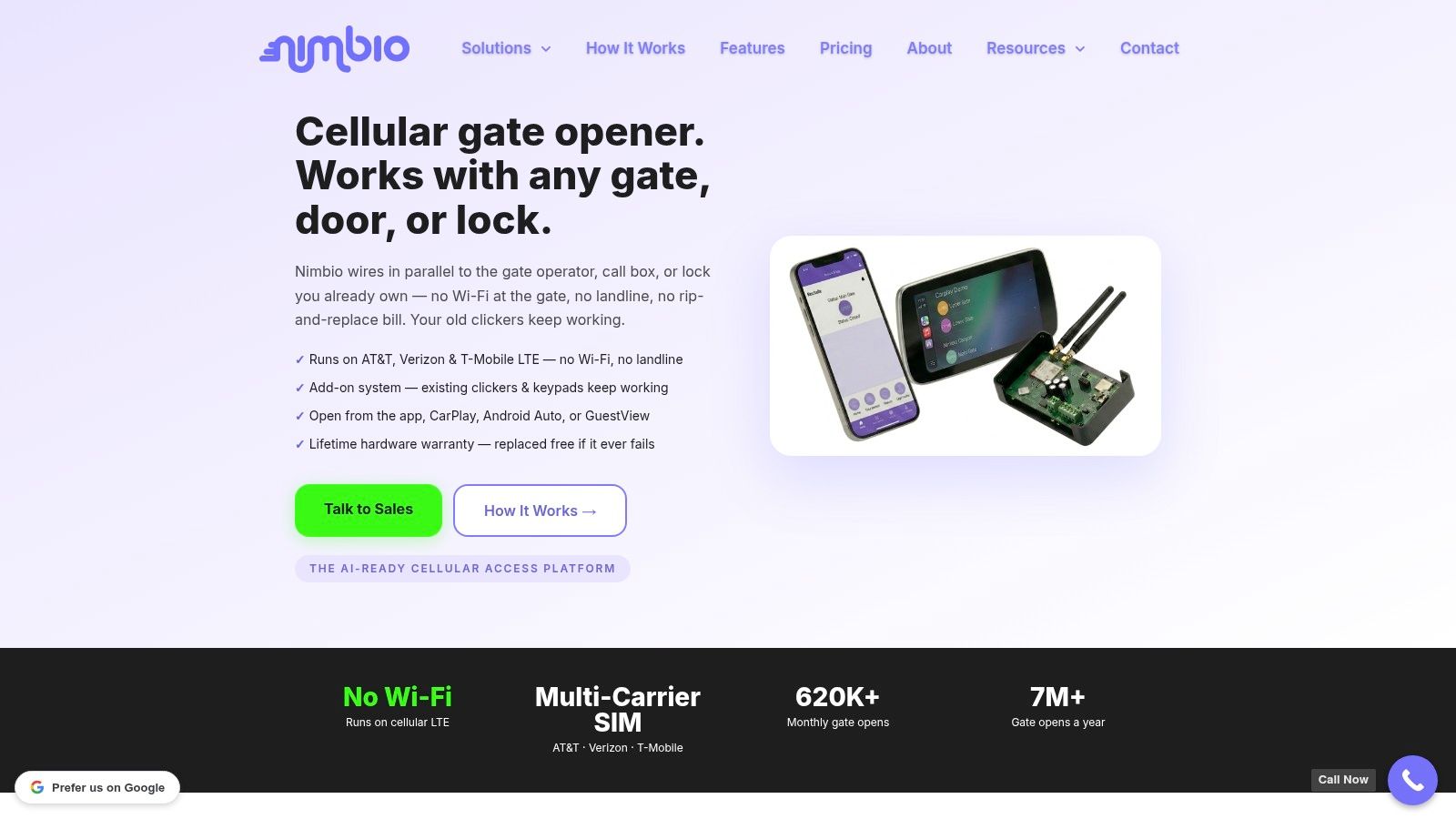
Use the apartment gate entry app to handle the entry side of that workflow. A guest arrives, taps the web directory, the resident gets a one-way video call on their phone, checks who's there, and grants access from anywhere.
That flow cuts out repetitive desk work and preserves staff time for resident relations and complex vendor coordination. It also gives managers better access logs than a clipboard and a memory.
A practical operating rule helps here:
- Keep humans on exceptions. Emergencies, complaints, and edge cases need judgment.
- Automate repeatable entry. If the same access event happens all day, it should not require desk labor.
- Retain audit trails. Every grant, revoke, and scheduled entry should be traceable.
For teams comparing systems, selecting a smartphone gate controller is less about novelty and more about whether the control layer keeps working when cellular coverage is stable and lobby Wi-Fi isn't.
How to Choose and Procure the Right Concierge Solution
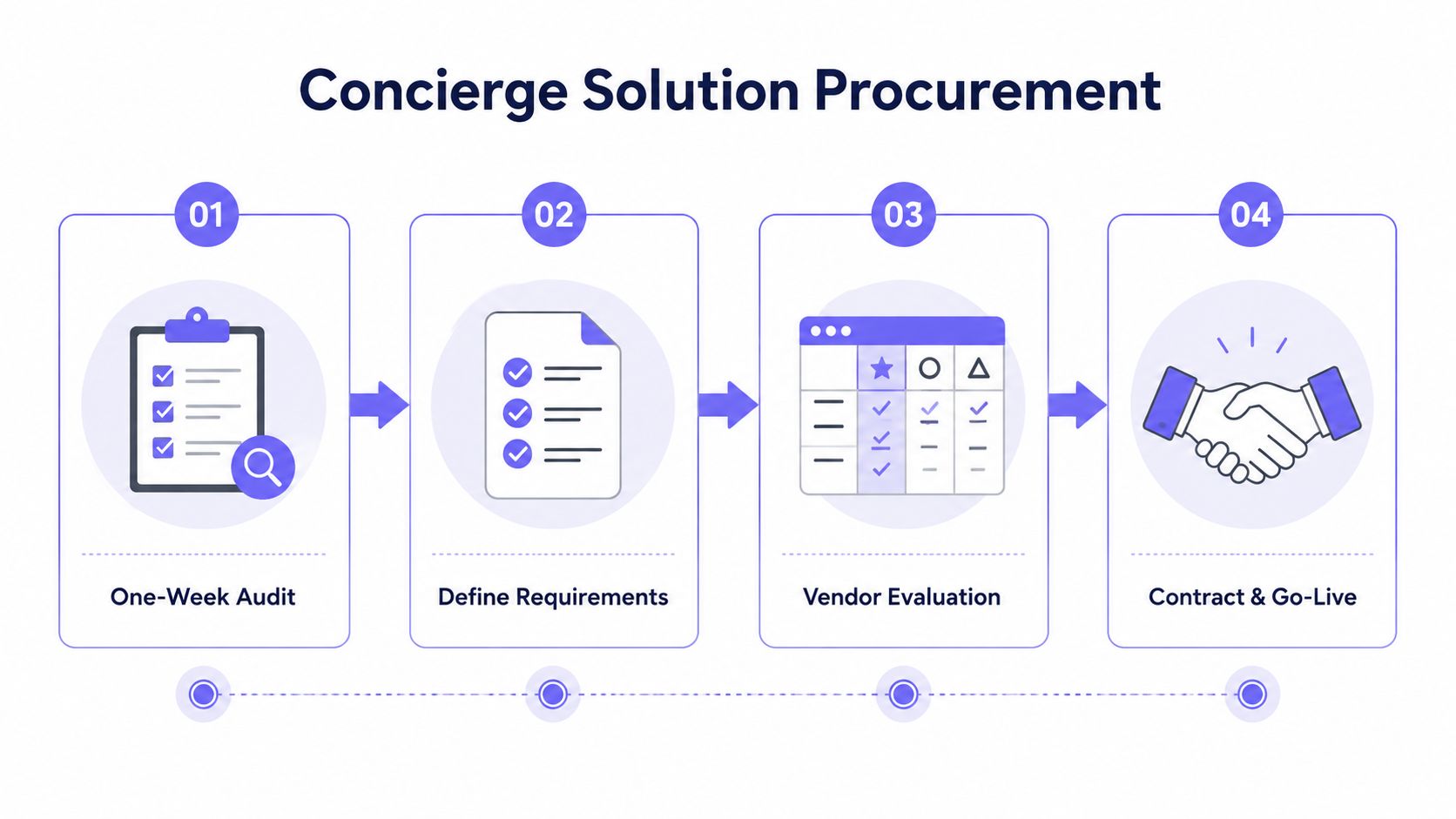
The fastest way to overspend is to buy a concierge model by habit or by habit dressed up as “upgrades.” Start with a one-week audit of what the front desk does, not what a sales deck claims it does.
Count entries, log packages, note vendor holds, and record every after-hours request that needs a person. That gives the board a workload map, which is what you need before you decide whether a staffed desk, a hybrid setup, or a digital access layer belongs in the building.
Use procurement criteria that force clarity
Any RFP should spell out these points, because vague scopes are where properties lose money.
- Coverage hours: define exactly when a human is needed, and when software can carry the load.
- Audit trail: require searchable logs for access events, resident requests, and exceptions.
- Integration: check whether the system connects cleanly with property management software.
- Data export: make sure the property can pull records without vendor friction.
- Service flexibility: keep the contract adaptable so services can be added or removed without renegotiating everything.
A helpful side reference for managers handling vendor language is negotiating landscape maintenance terms, because the same discipline applies. Scope, service levels, and exit terms matter more than polished sales language, and sloppy wording costs more than a glossy proposal ever saves.
For teams comparing systems, selecting a smartphone gate controller is less about novelty and more about whether the control layer keeps working when cellular coverage is stable and lobby Wi-Fi isn't. If the access layer depends on a perfect local network, it is the wrong fit for a real property.
Run the pilot like a board-ready test
A pilot should be built to answer a blunt question, does this setup reduce labor, tighten control, and keep residents moving without adding new problems? Set it up with a control building, pre-defined KPIs, and a go-or-no-go review so the board can judge the result without relying on opinions.
Security installers and low-voltage dealers should treat the pilot as a billable deployment opportunity, not just a product demo. The right partner can handle installation, support, and documentation without forcing the property into a long, rigid staffing commitment, which is exactly the kind of issue managers should already know from negotiating groundskeeping contracts.
For teams comparing the access layer to broader asset planning, smart investing in gate upgrades is the right mindset. Buy the system that removes bottlenecks, protects records, and cuts recurring friction. Buy the one that fits the way the building runs.
Measuring ROI and Resident Satisfaction After Rollout
Once the new setup is live, the board wants proof that it changed daily operations in a real way. The report should fit on one page and be quick to explain without a long defense of the budget.
The clearest dashboard breaks performance into four buckets. Operational shows whether the desk or system is keeping up, financial shows whether labor and rework are going down, security shows whether access is auditable, and experience shows whether residents feel the difference. That structure keeps the conversation tied to outcomes a property team can control.
Track what the concierge role is already expected to document
A concierge job description from InterviewGuy lists monitoring visitor access, helping in emergencies, and keeping records of resident inquiries, complaints, comments, and actions taken, which puts audit-ready documentation inside the role itself. A separate hospitality industry guide from the American Hotel & Lodging Educational Institute also treats guest records, problem escalation, and front-desk coordination as core concierge duties, which reinforces the same point. The standard is documentation, not vague friendliness.
That is the benchmark a new system has to beat. If it cannot produce clean records, it is not replacing concierge work, it is pushing the mess into another corner of the operation.
Use four metric families and keep them simple
- Operational: entry log completeness, package pickup time, after-hours response.
- Financial: staffing hours redeployed, cost per controlled entry, lost-key or fob-replacement savings.
- Security: incident logs, unauthorized entry attempts, audit-trail completeness.
- Experience: resident survey scores, online review sentiment, renewal intent.
A monthly report should show trend lines, not a pile of screenshots. It should also name the one or two actions that followed the data, because boards care about decisions more than dashboards.
The better comparison evaluates which combination creates the safest resident experience at the lowest defensible cost per unit. A staffed desk may still make sense in buildings with heavy package volume or constant visitor traffic. A digital access layer may beat it in properties where the concierge desk is mostly handling routine entry, calls, and repetitive triage. The right answer is the one that cuts waste without creating a security gap.
For teams weighing that decision against broader asset planning, smart investing in gate upgrades is the right frame. Use the system that removes bottlenecks, protects records, and lowers recurring friction. Use the one that fits the way the building runs.