A battery gate opener stops being a convenience the moment the power drops and the entrance becomes the bottleneck for an entire property. Residents queue outside. Delivery drivers call the office. A manager has to decide whether to leave the gate unsecured, send staff outside, or start troubleshooting in the dark. That's why buyers who only compare motor horsepower or purchase price usually miss the bigger decision.
The practical question is simpler. How reliably will the gate operate over time, especially during outages, heavy use, and routine battery aging? For HOA boards, facility teams, and owners of private driveway gates, the best choice usually comes down to total cost of ownership. A cheaper setup that strands users during outages or burns through batteries under normal traffic isn't cheaper in practice.
Table of Contents
- Your Gate Is Stuck and the Power Is Out Now What
- Why Choose a Battery Gate Opener Over AC Power
- Understanding Battery Types and Runtimes
- Sizing Your System for Gate Weight and Usage
- Installation and Maintenance Essentials
- Integrating Smart Access with Battery Backup
- Key Questions for Your Vendor or Installer
Your Gate Is Stuck and the Power Is Out Now What
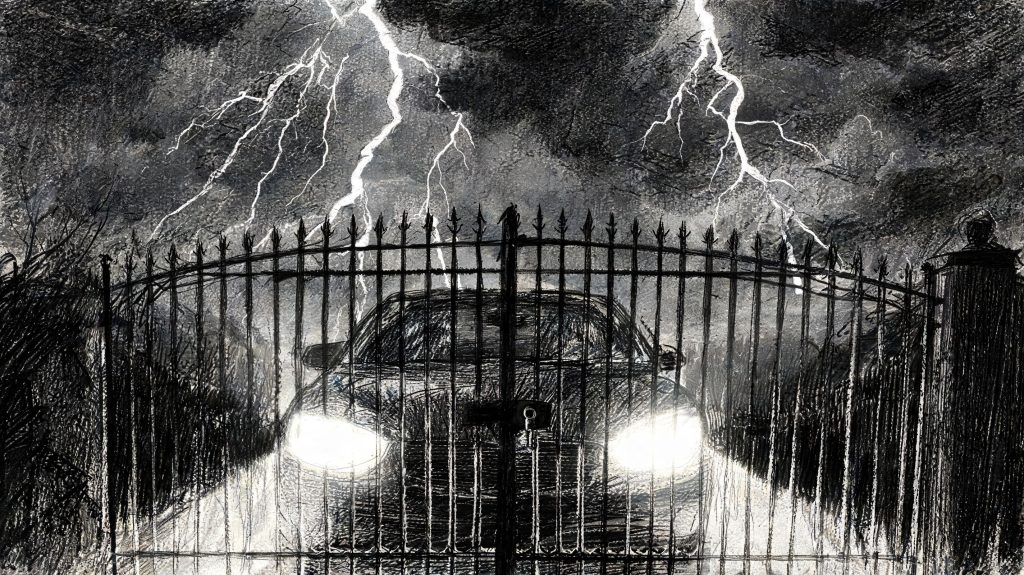
It is 9:40 p.m., the power is out, a tenant is trying to get in, and the gate will not move. At that point, nobody cares about brochure features. They care about access, safety, and whether the property is about to spend the night with the entrance stuck open or locked shut.
Start with the basics. Check whether the operator has battery backup and whether the board is still powered. Then confirm that on-site staff know the manual release procedure and can use it without guessing in the dark. If that process is not documented, troubleshooting residential gate access manually is the fallback that keeps people from being stranded outside or trapped inside.
This is the moment a battery gate opener proves its value. Stored power keeps the operator running long enough to maintain controlled entry instead of turning the gate into a dead barrier. For a property manager, that usually means fewer after-hours service calls, less pressure to prop the gate open, and a lower chance of creating a security gap during an outage.
The long-term cost question matters more than the purchase price. A cheaper system that drops offline every time utility power fails often costs more over a few years once you add emergency dispatches, tenant complaints, lost staff time, and premature battery replacement.
Smart access adds another layer. If your site uses remote credentials, phone entry, or a platform such as Nimbio, backup power should cover more than the motor. The controller, communication hardware, and any connected access device need enough reserve power to stay online during an outage, or you end up with a gate that can move but cannot receive authorized commands.
Practical rule: If the gate supports daily access control, battery backup is part of the operating budget, not an optional add-on.
The better buying question is simple. How long will the system keep working under outage conditions, and what will it cost each year to keep the batteries, charger, and connected access hardware dependable?
Why Choose a Battery Gate Opener Over AC Power
An AC-only gate can work well on sites with stable utility service, short cable runs, and low consequences if the entrance goes offline. But that setup has a hard limitation. When line power fails, operation usually fails with it unless there's separate backup built in.
A battery gate opener changes the design priority from simple power delivery to continuity. That matters most on properties where the gate is part of daily access control, not just perimeter decoration.
Reliability versus simplicity
AC-only systems have one clear advantage. They can be straightforward in the right setting, especially when power is already available at the operator location and the site doesn't need outage resilience.
Battery-backed DC systems win in places where uptime matters more than wiring simplicity.
- During outages: A battery-backed opener keeps the operator functional when utility service is interrupted.
- For low-voltage installs: DC systems are often easier to place in locations where trenching for line power would be costly or disruptive.
- For safety-minded sites: Low-voltage architecture is often easier to work into residential and light commercial layouts.
- For retrofit projects: Many existing operators can be modernized without replacing the whole gate system, especially when the core hardware is still mechanically sound.
A common objection is that battery systems aren't suitable for larger gates. That's usually the wrong framing. Heavy gates don't automatically require abandoning battery power. They require matching the operator, battery capacity, hinge or track condition, and traffic pattern correctly. A poorly balanced swing gate or a dragging slide gate will punish any power source.
Where battery-backed systems make more sense
Battery-backed systems tend to be the stronger choice in these situations:
- Gated communities: Residents expect the entrance to work after storms, not just on clear days.
- Commercial yards and service entrances: Missed access windows create operational delays that cost more than planned maintenance.
- Rural or long-driveway properties: Distance from utility power can make trenching expensive.
- Retrofit upgrades: Sites adding app-based entry or cellular access control usually benefit from stable backup power at the operator.
A gate operator shouldn't be judged only by how it runs on a normal day. It should be judged by how it behaves on the worst day the property is likely to have.
That's also why buyers comparing brands should look beyond the opener alone. Control boards, charging behavior, enclosure quality, and the condition of the gate itself usually determine whether the system stays dependable or becomes a recurring service call. Buyers evaluating Nimbio smart access solutions for gates should think the same way. Start with the power and operator fundamentals, then layer remote access on top of something mechanically sound.
Understanding Battery Types and Runtimes
The battery is the part most buyers under-specify and most managers only think about after a failure. That's backwards. Battery choice affects replacement intervals, cold-weather behavior, backup confidence, and how much maintenance a property team has to stay on top of.

What most systems actually use
Most gate opener systems are built on a standardized 12V DC or 24V DC architecture, typically using one or two 7 to 8 amp-hour batteries, according to Gate Opener King's guide to gate opener batteries. That standardization matters because it makes replacement easier and keeps many retrofit options practical.
For a property manager, amp-hours aren't just electrical jargon. They're stored reserve. More reserve usually means more tolerance for outages, more operating margin when batteries age, and less risk that a few heavy-use periods will drain the system faster than expected.
How to compare battery chemistries
Three battery types show up most often in this category: SLA/AGM, gel, and lithium-ion. None is universally best. The right choice depends on traffic, climate, maintenance habits, and whether the buyer cares more about lower upfront cost or longer service intervals.
| Battery Type | Avg. Lifespan | Upfront Cost | Best For |
|---|---|---|---|
| SLA/AGM | 3-4 years | Lower | Standard residential and light commercial duty |
| Gel | 3-5 years | Moderate | Sites needing deep-cycle behavior and strong environmental tolerance |
| Lithium | 4-6 years | Higher | Buyers prioritizing longer life, lower weight, and reduced replacement frequency |
SLA and AGM batteries remain the default on many gate systems because they're widely available and familiar to installers. They're usually the practical choice when the goal is predictable replacement and straightforward service.
Gel batteries fit buyers who want another sealed option and expect more environmental stress. They can make sense where temperature swings or charging patterns are hard on standard batteries.
Lithium-ion is attractive when reducing maintenance interruptions matters more than minimizing upfront spend. The purchase price is higher, but some managers prefer longer intervals between replacements and less weight inside the cabinet.
For readers comparing energy storage across mobile and off-grid applications, this overview of the best RV battery for boondocking is useful because it highlights the same real-world trade-offs seen in gate systems: runtime expectations, chemistry differences, and why the cheapest battery often isn't the cheapest ownership decision.
A few practical buying notes matter more than brand slogans:
- Match the battery to the charging system: A good battery can still underperform if the operator's charging circuit isn't appropriate for that chemistry.
- Don't “upgrade” capacity blindly: More capacity only helps if the cabinet, charger, and operator are designed to support it.
- Think about service logistics: On managed properties, easier sourcing and simpler replacement often beat theoretical performance gains.
Better runtime starts with a healthy gate and a correctly charged battery. It doesn't start with the most expensive label on the battery case.
Sizing Your System for Gate Weight and Usage
A property manager usually notices sizing mistakes during the first outage, not on install day. The gate still works on a light test cycle, then morning traffic hits, the battery voltage drops faster than expected, and residents start calling because the operator slows down or stops before the queue clears. That is rarely a battery brand problem. It is usually a sizing problem.

Start with gate load, then size the power system
The opener has to overcome the actual load of the gate in the field, not the ideal load shown in a brochure. Swing and slide operators behave differently under stress. So do steel frames, aluminum gates, and wood-clad leaves that looked reasonable on paper but ended up much heavier after fabrication.
I size around four things first:
- Gate type: Swing gates need torque through the arc. Slide gates need consistent rolling resistance and enough pull under load.
- Gate construction: Weight matters, but so do length, infill, and wind exposure.
- Travel condition: A gate with drag, sag, or rough rollers draws more power every cycle.
- Traffic pattern: A site with clustered entry periods needs more reserve than a site with the same daily count spread across the day.
Battery capacity cannot fix a gate that fights itself. It only masks the problem for a while, and that gets expensive. Shorter runtime during outages, more frequent battery replacement, nuisance service calls, and frustrated users all raise the ownership cost.
Size for outage performance, not just daily use
Earlier in the article, the market data noted that many battery gate systems can deliver a limited number of cycles during a power outage. The practical lesson is not the exact cycle count. The lesson is that reserve power disappears quickly on a heavy gate, a poorly adjusted gate, or a property with concentrated traffic.
A single-family entrance can often tolerate a modest reserve margin. A multifamily site usually cannot. If fifty residents try to leave in the same half hour, the battery system has to support repeated starts, accessory loads, and whatever extra drag the gate has developed since the last service visit.
That is also where total cost of ownership becomes more than an accounting phrase. An undersized system may look cheaper at purchase, but it burns through batteries faster, leaves less headroom for accessories, and creates more risk that smart access tools lose reliability right when utility power is down. If the property depends on cloud-based access control or remote management platforms such as Nimbio, the battery plan has to cover both gate movement and the supporting electronics long enough to stay useful during the outage.
For remote sites or solar-assisted setups, wider energy planning helps frame the conversation. Solar Energy Management LLC's guide is a useful reference for understanding how production, storage, and load assumptions affect real runtime.
Questions that expose bad sizing
A proposal is usually worth more when it answers operating questions clearly than when it advertises the biggest battery.
Use this filter:
- How many cycles are expected during an outage at this specific site? Ask for a site-based estimate, not a generic catalog number.
- What gate condition was assumed? Runtime estimates change if the gate is not moving freely.
- What accessory loads are included? Keypads, photo eyes, intercoms, locks, cellular devices, and smart controllers all draw power.
- What happens after battery aging? A system that works in year one can become marginal in year three.
- How will the gate and smart access system behave during an extended outage? You want a clear answer on priority loads, communication uptime, and manual override procedures.
Heavy decorative gates need extra scrutiny.
They often pass a basic weight check while still creating higher real-world demand because of wind load, long leaf length, or poor balance. In those cases, I would rather see a conservatively sized operator and realistic battery reserve than a lower bid built around brochure limits.
Good sizing protects reliability. It also protects your budget. The right system opens the gate, supports the access hardware you rely on, and gives you fewer battery replacements, fewer emergency calls, and fewer outage complaints over the life of the installation.
Installation and Maintenance Essentials
A reliable gate opener can still become unreliable if it's installed poorly or ignored after commissioning. Most battery-related failures don't start with a dramatic component defect. They start with small issues such as weak charging, dirty terminals, a dragging gate, or missed battery replacement.

Installation choices that affect reliability
The first question is whether the site is a genuine DIY candidate. Some residential kits are approachable for mechanically capable owners, but many gates aren't simple once wiring, safety devices, limits, and entrapment protection are involved.
Professional installation is usually the better route when the property has any of these conditions:
- A heavy or long gate: Operator geometry and mounting points matter.
- Shared user traffic: A malfunction affects many people, not one household.
- Existing access devices: Keypads, loops, intercoms, and remotes need clean integration.
- Safety hardware requirements: Photo eyes, edges, and compliant closing behavior need to be verified.
Hardware around the operator matters too. A self-closing gate with poor hinge selection can create unnecessary strain on the opener and battery system. Installers and owners reviewing mechanical components may find safe gate hardware from XTREME EDEALS INC. helpful when thinking about hinge quality and controlled movement.
A maintenance routine that prevents emergency calls
Gate opener batteries typically last 2 to 5 years, and high-traffic commercial gates often need replacement every 2 to 3 years. Slower gate movement is one of the clearest signs that the battery is nearing end of life, based on Vegas Valley Iron's guidance on automatic gate motor life expectancy.
That replacement window shouldn't be treated as a surprise. It should be part of the operating budget.
A practical maintenance routine looks like this:
- Test backup power twice a year: Confirm the gate still operates correctly on battery alone.
- Check battery voltage with a multimeter: Readings below 12 volts indicate battery failure.
- Inspect terminals and cables: Clean corrosion and tighten loose connections before resistance turns into charging trouble.
- Watch gate speed and sound: A gate that slows down or strains is telling staff something.
- Review the cabinet environment: Moisture, insects, and heat buildup shorten component life.
A maintenance visit should answer one question clearly. If utility power failed tonight, would the gate still operate the way the property expects?
Managers should also separate battery issues from mechanical issues. Replacing a battery won't fix a bent track, worn hinge, or misaligned stop. If the gate has to fight its own hardware every cycle, the new battery will age into the same problem.
The sites that spend less over time aren't the ones that avoid maintenance. They're the ones that turn maintenance into a schedule instead of an emergency.
Integrating Smart Access with Battery Backup
Smart access only improves a gate if the control layer stays available when the site needs it most. That's where many retrofit conversations go wrong. Buyers ask whether the app works, but they don't ask what powers the controller during an outage.
Where compatibility matters
Most modern electronic gate operators already sit on the standardized battery architectures discussed earlier. That creates a practical path for retrofits because the new access controller often doesn't require a full operator replacement. The smarter move is usually to preserve the working gate equipment and confirm the new controller integrates cleanly with the operator's existing power and trigger inputs.
For properties planning to retrofit electronic driveway gates with Nimbio, that compatibility question matters more than cosmetic features. The core concern is whether the gate can still receive commands, log activity, and stay manageable when line power is down.
What to verify before adding remote access
A smart access retrofit should be evaluated with the same discipline as the opener itself.
Ask the installer or integrator to confirm:
- Power source continuity: Does the controller draw from the operator's backed-up power path?
- Control behavior during outages: Can authorized users still trigger the gate if the building loses mains power?
- Preserved local access: Will remotes, keypads, or call boxes still work as intended?
- Auditability: Are entry events still captured consistently when the site is running on backup power?
- Battery priority: Has anyone calculated whether the gate operator and controller can share the available reserve without compromising core operation?
The trade-off becomes real in these situations. A site can have a battery-backed motor and still lose smart functionality if the communications or control hardware isn't powered correctly. On the other hand, a well-planned retrofit can keep both the physical gate movement and the administrative control layer operating together.
Remote access isn't truly resilient unless the gate, the controller, and the communications path all remain functional during the same outage.
For managers, the takeaway is simple. Don't evaluate smart access as a separate gadget. Evaluate it as part of the battery-backed operating system of the gate.
Key Questions for Your Vendor or Installer
A battery gate opener can look fine on a quote sheet and still turn into an expensive service problem two summers later. The difference usually comes down to what the installer has sized, documented, and tested before the system goes live.
Ask questions that expose total cost of ownership, not just purchase price. A lower upfront number means very little if the battery bank is undersized, the charger is mismatched, or the smart controller drops offline the first time the utility power fails.
Use this checklist in the bid review or site walk:
- What battery chemistry is included, and why does it fit this gate's duty cycle, site temperature, and service expectations?
- How many cycles should the system realistically support during an outage at this property's normal traffic level?
- What battery replacement interval should the owner budget for under local climate and gate usage?
- How will staff know battery capacity is falling before the gate becomes unreliable?
- Is the charging system matched to the battery type and sized for recovery after repeated use?
- During an outage, which functions stay live first: gate movement, safety devices, remotes, keypad access, call box, and smart control?
- If a smart system is added, can it remain operational on backup power so staff can still send commands, check activity, and manage access remotely?
- Can the operator accept third-party access control without forcing a full operator replacement later?
- What routine maintenance is expected, how often, and who will handle it?
- What does the warranty cover for batteries, boards, operator hardware, and labor?
- Which safety and installation standards is the installer following, and how are those documented for the owner?
The smart access question deserves extra attention. I have seen sites with a battery-backed operator that still lost remote management during outages because the controller, modem, or network hardware was left on an unprotected power path. For a property manager, that is a real cost issue. The gate may still move, but staff loses visibility, audit trail continuity, and the ability to respond remotely when the site is already under pressure.
For general industry guidance, buyers can review resources from the Door and Access Systems Manufacturers Association, which is one of the more established organizations in this space.
Clear answers here usually signal a contractor who is planning for service life, not just installation day. Evasive answers usually mean the owner will absorb the risk later through battery replacements, nuisance failures, and avoidable truck rolls.