A gate that works on mains power can still trap residents, block emergency vehicles, or leave a property open when utility power fails. That's why gate opener batteries should be selected, tested, and replaced based on outage behavior, not on voltage and physical size alone. The right choice depends on whether the gate must open and stay open, stay closed, or keep cycling, and on whether the battery can still carry the motor load at its lowest working voltage.
Table of Contents
- Understanding Outage Behavior and Backup Requirements
- Comparing Battery Chemistries and Climate Impacts
- Performing a Defensible Battery Health Check
- Safe Replacement and Charging Configurations
- Integrating Cellular Access with Battery Backup
- Establishing a Climate-Based Inspection Schedule
Understanding Outage Behavior and Backup Requirements
Utility power drops during a storm, the entrance gate opens once on battery, and then it stops halfway through the next cycle. Residents queue behind it while a manager searches for a manual release key that nobody can locate. That failure usually starts long before the outage, with a replacement decision that treated gate opener batteries as a simple size match.
The first decision is policy, not capacity. Fail-safe behavior favors opening on backup power and, in some residential and multifamily setups, staying open until utility power returns so people and emergency responders aren't locked out. Fail-secure behavior favors staying closed to protect the site. Neither setting is correct for every property, and local requirements vary.
What Local Rules Can Require
Local government guidance for automatic gates can require battery backup on both entrance and exit gates, which means testing only the entrance leaves half the outage plan unverified. Managers need the operator manual, the local fire authority's position, and the property's own access policy in agreement before a battery is ordered.
- Entrance and exit behavior: Confirm what each gate does when mains power is lost and again when it returns.
- Cycle expectations: Record how many opening and closing cycles the battery is expected to provide under the actual gate load.
- Access after depletion: Identify how residents, emergency responders, and delivery drivers get in once the battery is drained, and who operates the manual release.
A larger battery doesn't fix an undefined outage policy. Gate weight, cycle frequency, and emergency access requirements determine the appropriate setup.
Cost planning should follow that policy. Properties comparing backup options for a home or small site can review battery backup costs for Dublin homes as one reference point, while remembering that gate backup sizing still depends on the specific operator and required cycles.
One common purchasing error deserves a clear statement. The operator backup battery inside the control box powers the motor during an outage. The small cell inside a handheld remote only powers that remote. Replacing one won't fix a failure in the other, and troubleshooting should start by identifying which battery the symptom points to.
Access control adds another layer. A Nimbio cellular gate retrofit wires into the operator already on site, so its ability to open the gate during an outage still depends on that operator's battery and its configured behavior.
Comparing Battery Chemistries and Climate Impacts
Sealed lead-acid batteries remain the common choice for battery-backed operators because they provide standby energy in a compact, maintenance-light format and match the chargers built into many operators. Lithium retrofit batteries attract interest for longer runtime claims, but runtime alone is a poor basis for a swap.
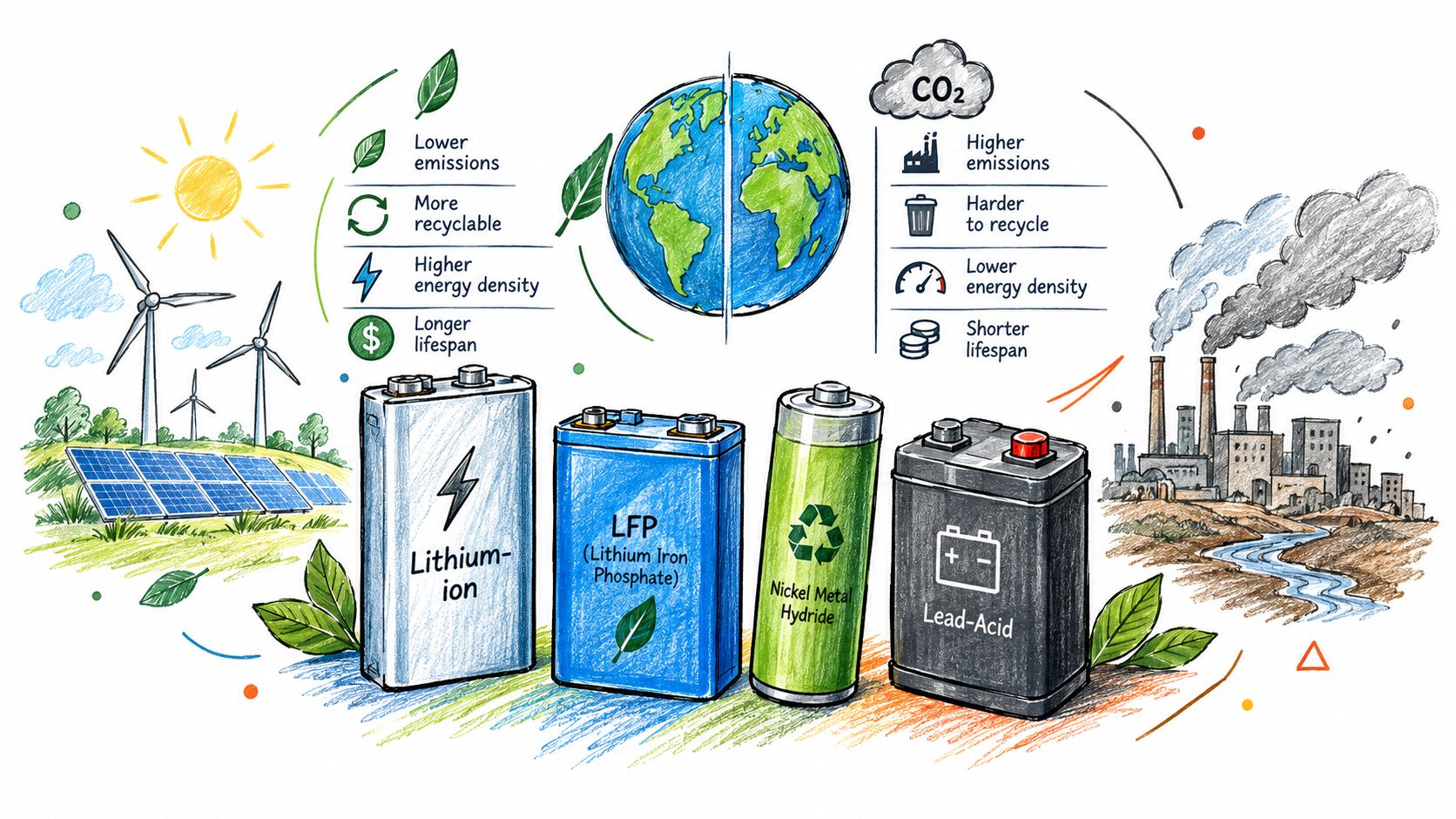
Climate changes the math quickly. Regional guidance on gate opener battery life in heat describes a two to three year replacement expectation in extreme heat versus three to five years in moderate climates for sealed lead-acid batteries. A control box in direct sun in a hot region can't be planned on the same interval as a shaded enclosure in a mild one.
Sealed Lead-Acid Versus Lithium
| Factor | Sealed lead-acid | Lithium-ion |
|---|---|---|
| Charger fit | Matches most existing operator chargers | Must match the charger and battery protections |
| Heat response | Faster deterioration in hot enclosures | Heat sensitivity and thermal runaway risk require caution |
| Cold response | Reduced available capacity in cold conditions | Performance varies by product design |
| Disposal | Established recycling routes in many areas | Product-specific safety and disposal guidance applies |
Lithium-ion isn't an automatically superior drop-in replacement. Fire and explosion risk, toxic gases, and sensitivity to heat or impact are material hazards, and use should stop when abnormalities appear. Enclosure ventilation, battery management protections, and the operator manufacturer's specifications all matter more than a capacity label.
Selection rule: Chemistry follows the operator manual and the site's fire, temperature, and maintenance constraints. A battery the charger wasn't designed for is a liability, whatever its rating.
Total cost over the operator's life also includes replacement availability and recycling rules, which differ by locality. For most existing properties, replacing gate opener batteries with the specified chemistry and shortening the inspection interval in harsh climates is the defensible path. A chemistry change should be an engineered decision with manufacturer approval, not a parts counter substitution.
Performing a Defensible Battery Health Check
A resting voltage reading can look normal on a battery that collapses the moment the motor starts. Voltage alone misses high internal resistance and insufficient delivered capacity, which is exactly the failure mode that matters during an outage.
A defensible check combines four elements. Technicians isolate the battery from the operator first, then document battery type, rated ampere-hours, temperature, terminal condition, and charger status before any measurement is taken.
The Four-Part Check
- Visual inspection: Look for swollen cases, corrosion, moisture, and damaged terminals or cables.
- Resting voltage: Allow the battery to rest, then record open-circuit voltage.
- Controlled load test: Apply the manufacturer's specified load and record voltage sag, time to the specified end voltage, and recovery voltage.
- Simulated outage: Disconnect mains power and verify the gate completes representative opening and closing cycles, recording failures and cycle count.
Capacity should be calculated against the manufacturer's rating and temperature corrected, since published ratings generally use a reference temperature near 20 to 25 °C (68 to 77 °F), as set out in guidance on evaluating time-adjusted battery capacity. That same method defines the ratio as measured discharge time divided by expected time, with temperature correction applied, and treats roughly 80% capacity as a replacement threshold for stationary lead-acid batteries.
Testing at full charge isn't enough either. UL 325 testing requirements for battery-backed operators require verification with the battery fully charged and again after discharge to the operator's lowest operational voltage. The operator still has to perform its safety and opening functions at that low point, and local requirements vary alongside the standard.
Never substitute an arbitrary automotive load tester or bypass the operator's minimum voltage cutoff to make a weak battery pass.
Repeat the full check at installation, after any deep discharge, and during periodic service. Written records of voltage sag, cycle count, and temperature give managers something firmer than a guess when a replacement budget needs approval. Where models differ, the operator manual governs, and a qualified technician should handle load testing.
Safe Replacement and Charging Configurations
Replacement starts with the operator's specified chemistry, voltage, and capacity, printed in the manual for the exact model. Guessing from the size of the old battery invites mismatched pairs and charger problems.
Many 24-volt systems use two 12-volt batteries in series. A gate opener manual specifying a 24 V, 12 Ah battery confirms that two 12 V batteries in series may provide the required supply, and that the battery voltage should stay above 22 V for normal operation. Series wiring adds voltage while amp-hour capacity stays equal to one battery, so two 12 V, 12 Ah batteries produce 24 V, 12 Ah, not 24 Ah.
Matching and Wiring Rules
- Replace series pairs together: Mixing substantially different ages or capacities leads to uneven charging and early failure.
- Check incoming voltage: That same manual recommends a digital voltmeter and keeping voltage within 10% of the opener's rated voltage.
- Isolate before work: Disconnect electrical power and any buffer batteries before work on the installation.
Charging needs control, not a fixed guess. Texas Instruments guidance on sealed lead-acid charging identifies a charging range of roughly 2.20 to 2.45 volts per cell, which works out to about 13.2 to 14.7 V for a 12-volt battery and 26.4 to 29.4 V for a 24-volt battery. Standby systems normally drop to a lower float voltage once the battery is full. Temperature compensation of about minus 2.5 mV per °C per cell near 25 °C matters because heat without compensation causes overcharging, while cold reduces capacity and causes undercharging.
Placement is a safety item. A gate opener manual on battery placement and charging states batteries should be waterproof or installed in a waterproof enclosure and warns against connecting a solar panel directly to the control board to charge the battery. The specified charger or charge controller must sit in the charging path, terminals stay dry, and one manual also specifies a 30 mA residual-current circuit breaker upstream of the mains supply.
Installers adding access hardware should confirm the add-on's power draw against the device specs for smart entry before connecting it to an operator whose battery margin is already thin.
Integrating Cellular Access with Battery Backup
A cellular add-on controller doesn't bring its own path around a dead operator battery. It wires into the operator already installed, so when mains power fails, the operator's backup battery still has to cycle the gate. Access requests can arrive perfectly while the gate itself can't move.
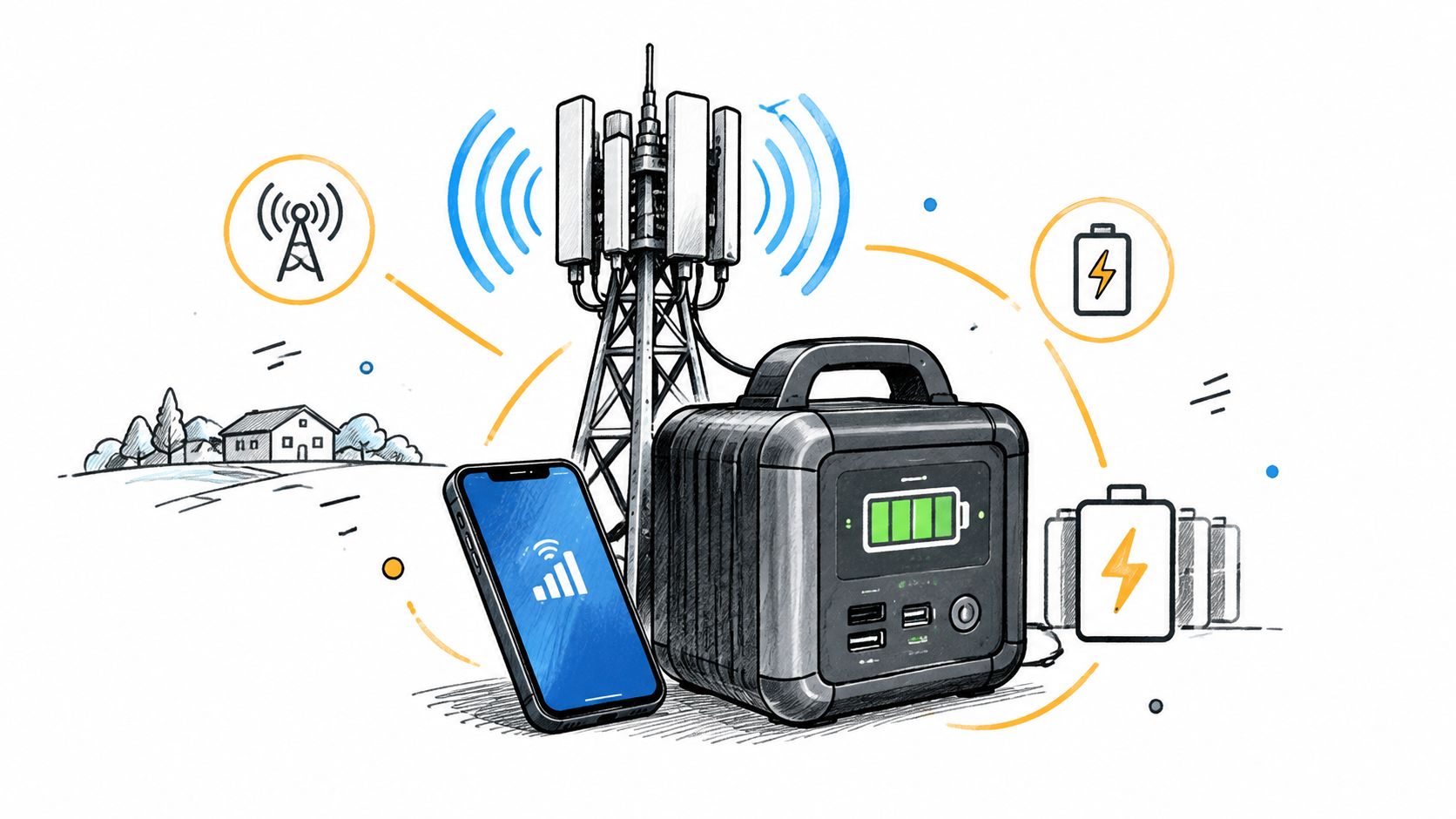
That dependency shapes what cellular access does well during an outage. Because the connection runs over cellular LTE, it needs no Wi-Fi at the gate, so a failed local router or cut internet line doesn't block a manager from issuing or revoking a digital key remotely. Keys can also carry an expiration date, which suits vendors and short-term guests.
What Keeps Working, and on What Power
- Existing clickers, fobs, and keypads: These keep working alongside the app, provided the operator has power.
- Remote visitor entry: Visitors can be let in remotely, including video verification of a visitor at the gate, as long as the battery can cycle the gate.
- Manager control: Key changes happen remotely over cellular even when site internet is down.
Nimbio is one example of this hardware-agnostic approach. It connects over cellular LTE and wires into the existing operator, with no need to replace the gate, and also works with electric locks as a secondary use. Details on the connection model are covered in how cellular gate openers work.
Planning point: Budget battery capacity for the access method people will actually use during an outage. Remote entry requests still consume opening cycles.
Properties modernizing entry should therefore test the whole chain together. Disconnect mains power, send a remote open command, run the gate through representative cycles, and confirm entrance and exit behavior matches the site policy. A cellular controller widens who can request entry. The battery still decides whether the gate answers, so gate opener batteries stay on the maintenance schedule after any access upgrade.
Establishing a Climate-Based Inspection Schedule
Calendar age is a weak predictor of outage performance. Calendar life describes standby service on float charge, while cycle life describes how discharge depth during outages consumes the battery. Treating the two as interchangeable leads to replacements planned too late.
Technical documentation for small sealed lead-acid batteries commonly specifies a nominal service life of about 3 to 5 years under continuous float charging at about 20 °C, with some larger or premium designs rated 6 to 8 years under controlled conditions, according to a sealed lead-acid battery manual with service life data. Cycle figures from the same data show roughly 200 cycles at 100% discharge depth, about 225 cycles at 80%, and around 500 cycles at 50%.
Building the Schedule Around Site Conditions
A nominal five-year battery may need earlier replacement after extended outages, solar charging failures, or excessive cycling drains it and repeatedly. Scheduling should follow the conditions the battery sees.
- Hot climates: Inspect more often, check enclosure ventilation, and expect a shorter service window.
- Wet or storm-prone sites: Check for moisture intrusion, corrosion, and charger damage after major storms.
- After any deep discharge: Run the load test and simulated outage rather than waiting for the next routine visit.
Document each visit with rest voltage, load results, cycle count, and temperature so decline shows up as a trend instead of a surprise. Replacement approval gets easier for HOA boards and managers when records show capacity falling toward the replacement threshold.
Gate opener batteries earn their keep on the worst day, not the average one. A schedule tied to climate, discharge history, and measured capacity keeps that day from becoming an access failure.
A battery that still cycles the gate during an outage is what makes remote access worth having, and Nimbio adds cellular control to the operator already on site so managers can issue, revoke, and expire digital keys without Wi-Fi at the gate. Visit the site to see how a hardware-agnostic retrofit keeps existing clickers, fobs, and keypads working while adding app-based entry and remote visitor verification.