Basic replacement fobs typically run $50 to $400 for the hardware, plus $50 to $100 for programming. The final price depends heavily on whether the gate uses a standard remote, a transponder key, or a smart proximity key.
But how much do fob keys cost after the service call, programming, cutting, and testing are added? That gap between the price printed on a replacement fob and the amount on the final invoice catches property managers and homeowners off guard, especially after a lost remote has already created an access problem.
For a property with an electronic gate, the right quote starts with the access technology already installed. A basic remote may be relatively straightforward, while a security credential that must be paired with an immobilizer or control system can require specialized equipment and labor. The figures below provide a practical budgeting reference, while the gate operator's make, model, and programming method determine the actual price.
Table of Contents
- How Much Do Fob Keys Cost Overview
- Understanding Fob Key Types and Base Prices
- Dealership vs Independent Locksmith Pricing
- Programming and Labor Fee Breakdown
- Smartphone Access as a Cost Alternative
- Making the Right Choice for Your Property
How Much Do Fob Keys Cost Overview
How much do fob keys cost after the replacement device, programming, travel, and testing appear on the invoice? The hardware price is only the starting point. For property managers, the total cost of ownership depends on whether the credential is simple legacy hardware or part of a more controlled access system.
A basic remote or transponder fob may carry a modest sticker price, while a smart key combines remote commands, proximity detection, immobilizer registration, and push-start authorization. Kelley Blue Book describes basic installed replacements near $100 to $300 and smart proximity replacements near $350 to $850. Those figures show why the device type matters before anyone compares service quotes.
Practical rule: Ask for separate line items for the fob, programming, cutting, taxes, service calls, and emergency charges.
Legacy gate remotes often communicate with a receiver through a defined signal, making replacement relatively straightforward when the make and model match. Smartphone-based access can change the cost pattern. It may reduce the need to stock physical remotes, but the property may still pay for a compatible controller, setup, user enrollment, software administration, or ongoing service. Compare the complete operating cost, not just the price of one replacement credential.
Why the sticker price misleads
An inexpensive fob bought online may remain unusable until it is paired with the vehicle or access system. Programming can require diagnostic equipment, a technician's time, travel, and a system test. Those charges can bring the final bill close to, or well above, the hardware price.
A vehicle example shows how sharply provider and programming choices affect the total. Consumer Reports cites an Audi replacement averaging about $500 including programming, compared with an independent automotive locksmith quote of approximately $200 to $250 for comparable work.
For a gated property, ask whether the quote covers one working credential or the complete replacement service. A low device price does not mean a low ownership cost if every remote requires a scheduled visit, individual enrollment, or an emergency call.
Understanding Fob Key Types and Base Prices
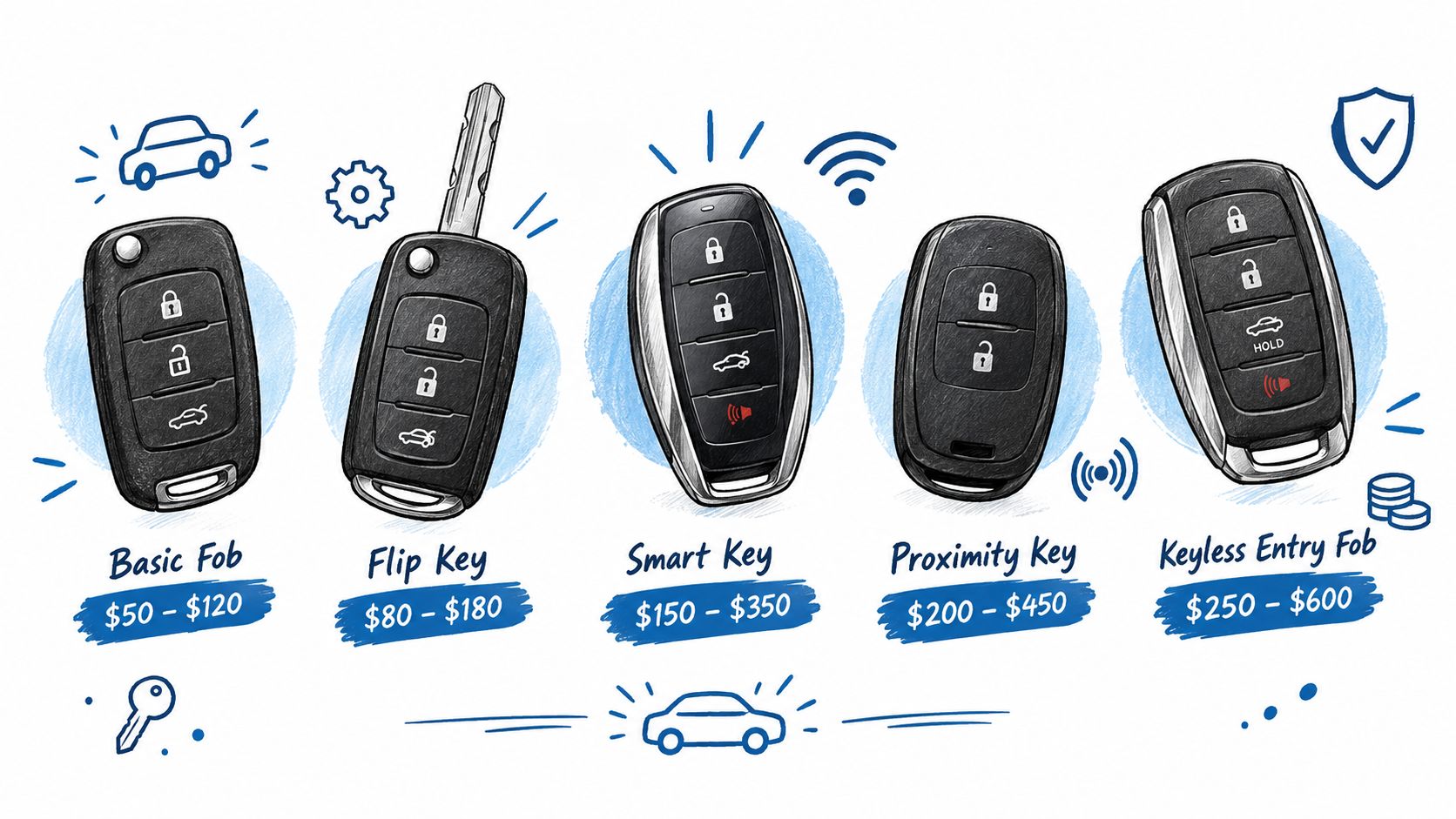
Pricing jumps sharply between credential types. A basic gate remote may cost $20 to $60, while a smart proximity fob can exceed $400 before programming. The hardware price is only the starting point. Labor, enrollment, compatibility checks, and system testing can determine the final cost of ownership.
Basic remotes
A basic remote sends commands such as lock or gate open to a receiver. It usually does not include the vehicle-start authorization found in modern car keys, so the replacement process may be simpler. Compatibility still controls the price. The receiver may accept only a specific frequency, signal format, or credential family.
The low sticker price can mislead property managers. A remote bought online may still need pairing, a technician visit, and a system test. If each replacement requires individual enrollment, the labor can approach or exceed the device cost.
Transponder keys
A transponder credential contains an embedded security chip. Angi places many transponder key replacements around $50 to $150 and explains that programming is the major distinction from copying a metal key. The same distinction applies to property access. Copying a device's shape does not authorize it with the receiving system.
A vehicle example shows how provider and programming choices affect the total. Consumer Reports cites an Audi replacement averaging about $500 including programming, compared with an independent automotive locksmith quote of approximately $200 to $250 for comparable work.
Smart proximity fobs
Smart proximity fobs sit at the higher-cost end because they can support proximity detection, rolling codes, and controlled credential enrollment. They are registered with the vehicle or access controller rather than copied, and the exact process depends on the manufacturer.
For a high-end entry system, request the credential type, compatible receiver or controller, programming method, and labor charge in writing. A property evaluating high-end door entry systems should compare those recurring service requirements with the cost of legacy remotes.
For terminology and management considerations, consult this RFID credential guide for property managers. The device's appearance alone cannot show whether replacement requires simple duplication, system enrollment, or a technician's visit.
Dealership vs Independent Locksmith Pricing
Which provider gives the lowest total cost, not merely the lowest fob price? The answer depends on the system, the equipment required, and what the quote includes. A dealership may have direct access to manufacturer procedures and diagnostic tools. An independent locksmith may offer mobile service and a lower rate, but only if the technician supports the specific vehicle or access controller.
The hardware sticker price is only one part of ownership. Programming, cutting, testing, travel, and appointment charges can add enough labor to make a seemingly inexpensive replacement cost far more than expected. Ask for the complete price before approving the job. Consumer Reports describes an Audi replacement averaging about $500 with programming, compared with an independent locksmith's estimate of approximately $200 to $250 for comparable fob, cutting, and programming work.
What the dealer route offers
A dealership or authorized service center can be the practical choice when the system needs manufacturer-specific diagnostics, restricted software, or documented ownership checks. The trade-off is a quote that may separate the part, programming, diagnostic access, appointment, and labor charges.
For a gate, the comparable provider may be the original installer or an access-control technician familiar with that controller. Ask whether the technician is adding one replacement credential or changing the receiver's stored credentials. Those services affect different parts of the system and should not carry the same price without explanation.
Where an independent provider can help
An independent locksmith is often the better value after confirming the exact make, model, and credential type. Kelley Blue Book says independent locksmiths may save roughly 10% to 25% versus dealerships, while also warning that compatibility and proof of ownership remain essential. On a $400 smart key, that range represents roughly $40 to $100 in potential savings before any travel or emergency charges.
A low quote can still become expensive if the fob supports only some functions or cannot authorize the system. Confirm that the provider has the required programming equipment, supplies compatible hardware, and will test access after enrollment. Request an all-in written quote that separates hardware from labor.
A cheap credential that fails at the gate is an unpaid service call waiting to happen.
For a community or multi-tenant property, scheduling also affects total cost. A planned replacement with a slightly higher upfront charge may be preferable to an emergency visit that leaves residents, vehicles, or delivery providers waiting outside.
Programming and Labor Fee Breakdown
Why can a replacement fob cost far more than the small piece of hardware suggests? The sticker price covers only the credential. Programming, cutting, diagnostics, travel, and testing can turn a modest replacement into a much larger ownership cost, especially when each lost or deactivated fob requires a technician.
A mechanical key can often be copied from its cuts. An electronic fob requires enrollment with the vehicle or access controller. Ryan's Automotive explains that a fob can lock or unlock doors yet fail to start the vehicle when its electronic identity has not been paired with the immobilizer, and reports dealer ranges of about $150 to $350 for a basic replacement fob, about $250 to $600 for smart or proximity fobs, with programming commonly adding approximately $50 to $150. Those automotive figures may not match a gate operator's pricing, but they show why hardware and labor must be evaluated separately.
Read the quote line by line
A written estimate should identify each charge:
- Credential hardware: The replacement remote, transponder key, or proximity fob.
- Programming: Electronic enrollment with the vehicle or access controller.
- Mechanical work: Cutting a blade when the credential includes one.
- Travel and service: Mobile, emergency, diagnostic, or after-hours charges.
- Testing: Confirmation that the intended functions work after programming.
This breakdown exposes the difference between a low hardware price and the final invoice. Legacy fobs may be inexpensive to buy yet costly to replace repeatedly when every new credential needs professional enrollment. A smartphone-based alternative may reduce physical hardware handling, but it still has its own setup and service costs. Compare the complete operating cost, not just the device price.
Why the labor can feel disproportionate
Dealer programming may take 15 to 30 minutes, yet Consumer Reports notes that proprietary diagnostic equipment can create a labor charge approaching a full hourly rate. The charge covers more than button presses. It also reflects equipment, technician training, access to programming procedures, and responsibility for completing enrollment correctly.
Avoid self-programming unless the manufacturer explicitly supports it and provides a suitable procedure. Gate models vary, and an incorrect change can affect stored credentials or the operator's configuration. Follow the manual or use a qualified technician who can identify the installed model before changing settings.
Smartphone Access as a Cost Alternative
Physical fobs create a recurring management task. A resident loses one, a former occupant keeps one, or a property needs to issue access to a visitor, and the manager must decide whether to program another credential or alter the access list. The hardware bill is only part of the ownership burden. Staff time, scheduling, record keeping, and the risk of leaving an old credential active also matter.
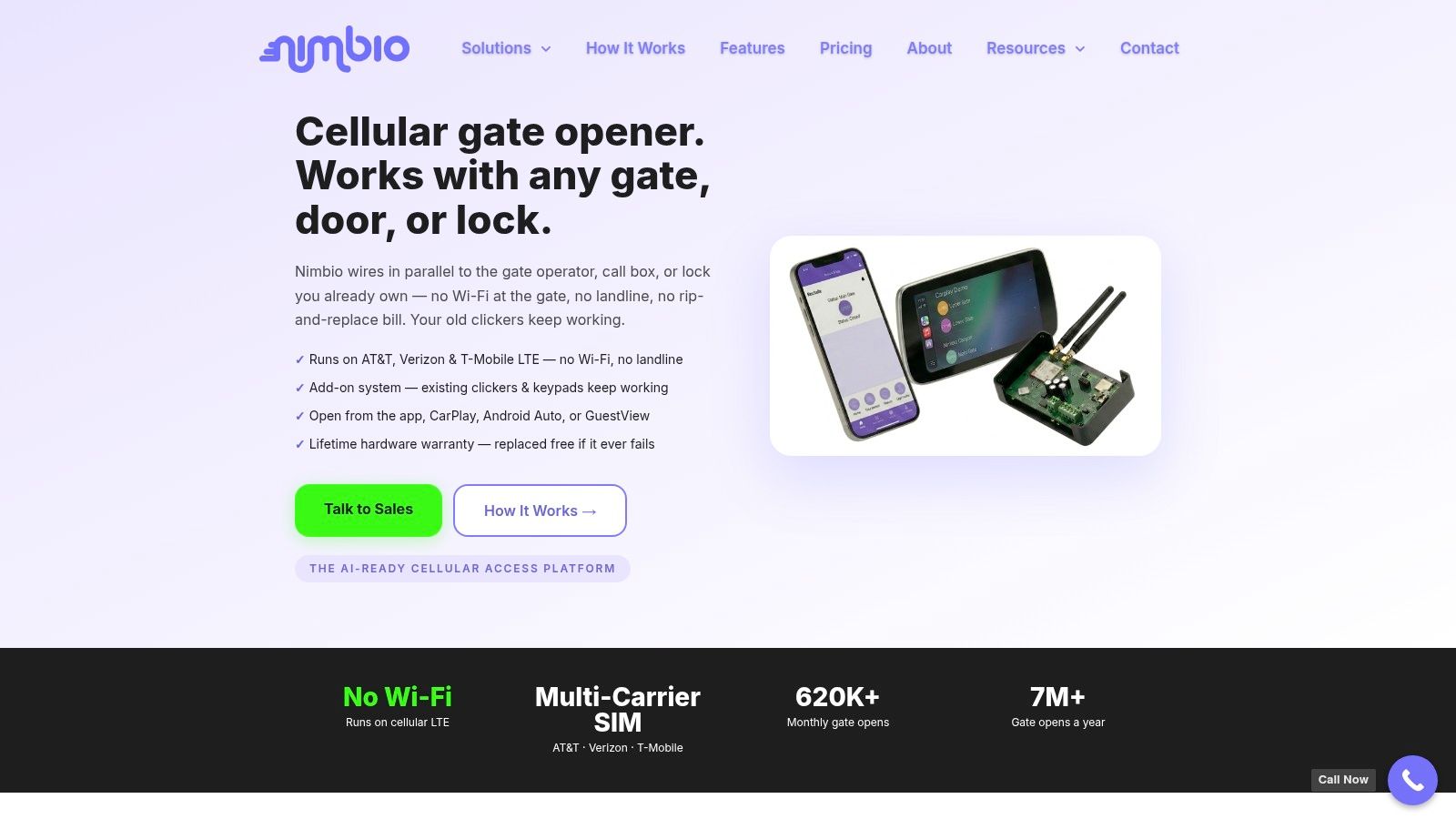
A smartphone-based approach changes the unit of management from a piece of hardware to a digital key. Nimbio makes a cellular add-on controller and smartphone app for electric gates, with electric locks as a secondary use. It connects over cellular LTE, so it doesn't need Wi-Fi at the gate, and it wires into the gate operator a property already has rather than requiring replacement of the gate.
Where the cost model changes
Property managers can issue and revoke digital keys remotely and set an expiration date on a key. That can reduce the need to handle a physical credential when access changes, although existing clickers, fobs, and keypads can continue working alongside the app.
The comparison should be made over the property's actual operating pattern. A small property with stable occupancy may find traditional fobs easy to administer. A property with frequent resident changes, temporary workers, or regular visitor access may place more value on remote administration than on the lowest single replacement price.
The app also supports remote visitor entry, including video verification of a visitor at the gate. That gives the manager or authorized resident another way to handle access without issuing a temporary physical fob for every short-term need.
For boards evaluating a phone-based approach, this information about how to replace key fobs for gated communities can help frame the decision around administration as well as hardware. No access method removes the need for sensible permissions, resident communication, and a documented process for lost devices.
The right comparison isn't a fob against an app in isolation. It's the full cost and workload of issuing, changing, testing, and removing access over time.
Making the Right Choice for Your Property
The best replacement path depends on the property's technology and operating habits. A manager should first identify the operator or access controller, confirm the credential type, and ask whether the provider is quoting hardware only or a completed programming visit.
A practical decision check
- Few users and stable occupancy: Traditional replacement may be the simplest option when the system is familiar and credential changes are infrequent.
- Frequent turnover: Remote digital-key administration may deserve consideration when staff regularly issue and revoke access.
- Emergency need: A local qualified locksmith or access technician may be faster, but the written quote should include travel and after-hours charges.
- Higher security requirements: The provider should explain how credentials are enrolled, revoked, and tested. Compatibility matters more than a generic fob's appearance.
- Existing equipment: A hardware-agnostic add-on can be relevant when the property wants to keep its gate operator and allow existing clickers, fobs, and keypads to work.
The property should also record who can authorize a new credential. A clear approval process prevents residents or staff from ordering incompatible devices and gives the board a defensible record of access changes. For manufacturer-specific repair, wiring, or troubleshooting, the operator manual and a qualified technician should take priority over generic online instructions.
A planned replacement is usually easier to control than an emergency one. Managers can collect the model information, request an all-in quote, and compare the cost of hardware, programming, cutting, service calls, and testing before someone is locked out.
For properties considering cellular access, review the available cellular gate opener pricing alongside the current fob workload, without assuming that a technology change fits every gate or budget.
Nimbio provides a cellular LTE controller and smartphone app for electric gates, while existing clickers, fobs, and keypads keep working alongside the app. Property managers can issue or revoke digital keys remotely, set expiration dates, and let visitors in remotely with video verification, so visit Nimbio to assess whether that approach fits the property's access needs.