A property manager comparing a swing gate opener kit may be trying to automate a driveway gate, replace a failing actuator, or stop recurring access complaints. The right approach is to assess the gate's condition and swing path, select an operator suited to its actual workload, and have the complete installation tested for entrapment protection. Motor size and remote controls matter, but neither can make an unsuitable gate safe.
Table of Contents
- What a Swing Gate Opener Kit Actually Includes
- How to Match a Kit to Your Gate
- Installation Steps That Meet Safety Standards
- Power Options and Access Control Retrofits
- Troubleshooting Common Installation Issues
- Maintenance and Emergency Operation Planning
- Final Checklist Before You Buy and Install
What a Swing Gate Opener Kit Actually Includes
Consider a hypothetical property manager whose gate sometimes closes normally and sometimes reverses before reaching its stop. A replacement kit might seem like the obvious fix. Before ordering, the manager needs to establish whether the problem belongs to the operator, the gate structure, or the installed safety system.
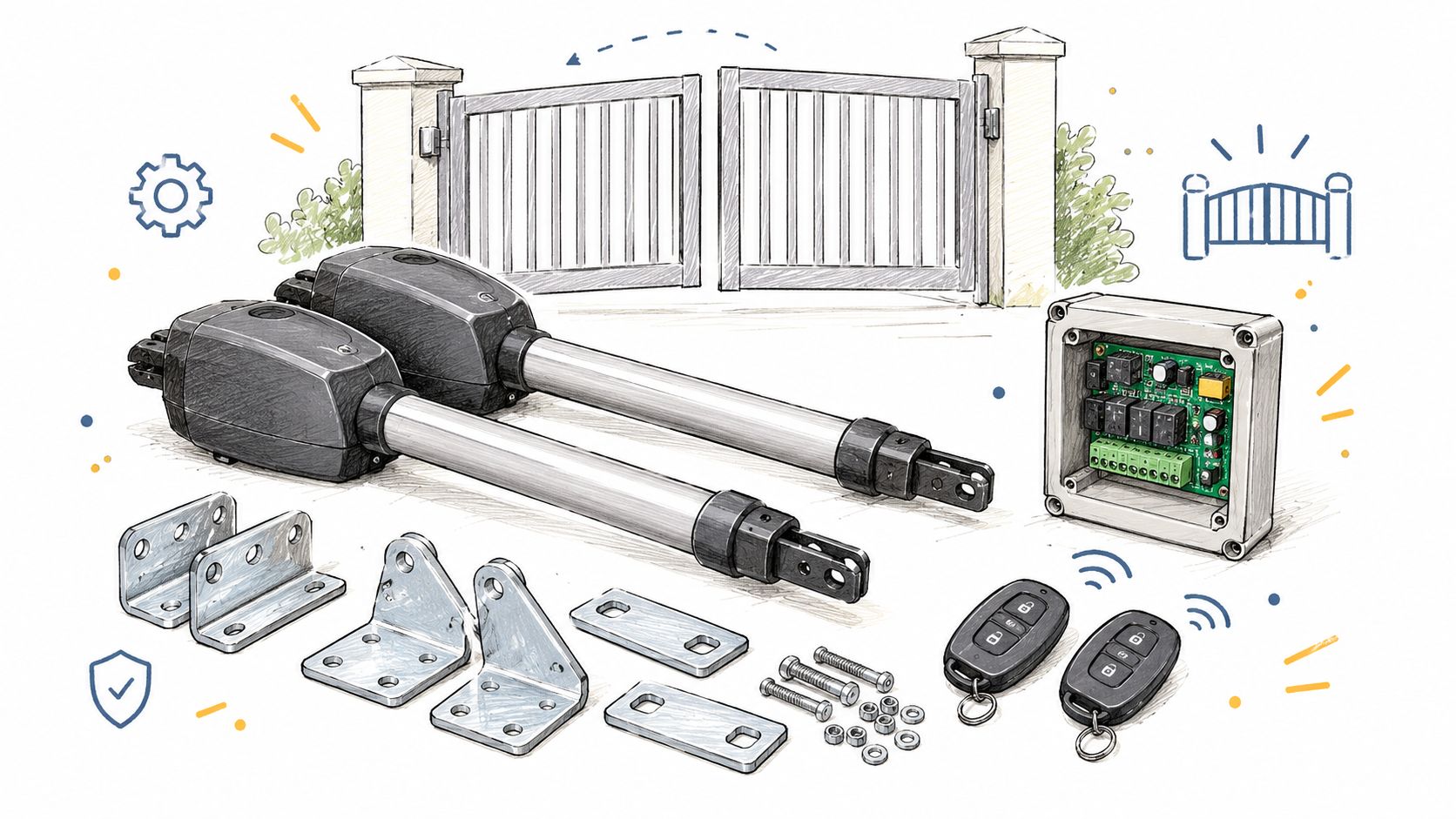
That distinction matters when comparing packages. A product image can show actuators, brackets, and transmitters without establishing that the package includes every device required at the property.
Read the Parts List Before Comparing Features
Kit contents vary by model and package. The purchaser should obtain an itemized list rather than assume that every component pictured is included.
- Operator or actuator: The mechanism that moves the gate leaf, selected according to the manufacturer's permitted gate dimensions, loads, and mounting geometry.
- Control board: The operator's controller, with model-specific connections and settings.
- Access devices: Remote transmitters or other activation equipment included in the package.
- Protective devices: Compatible photoelectric sensors, contact edges, or other protection specified for the installation.
- Mounting hardware: Brackets and fasteners whose suitability must be checked against the actual posts and gate construction.
Safety requirements developed alongside powered opening systems. USAutomatic's UL 325 history identifies the standard's first publication in 1973, its later expansion to gate operators, a major revision effective in March 2000, and the seventh edition, commonly identified as UL 325-2018, effective August 1, 2018, with updated provisions addressing crushing, pinching, and entrapment for operators manufactured from that date onward. Local requirements vary, so that history doesn't replace a current installation assessment.
Separate Movement, Protection, and Access
These are different purchasing decisions. The operator moves the gate, protective devices address identified hazards, and access equipment determines who can request entry.
A cellular controller belongs to the access layer. Understanding how a GSM gate opener works helps distinguish an access retrofit from replacement of the gate's operating equipment.
A complete-looking box isn't proof of a complete installation. The parts list must be checked against the property's hazards and the operator's instructions.
The existing hinges, posts, stops, and surrounding fence remain part of the project. A sensible quotation identifies any structural work and additional protective equipment separately, rather than presenting the kit price as the entire scope.
How to Match a Kit to Your Gate
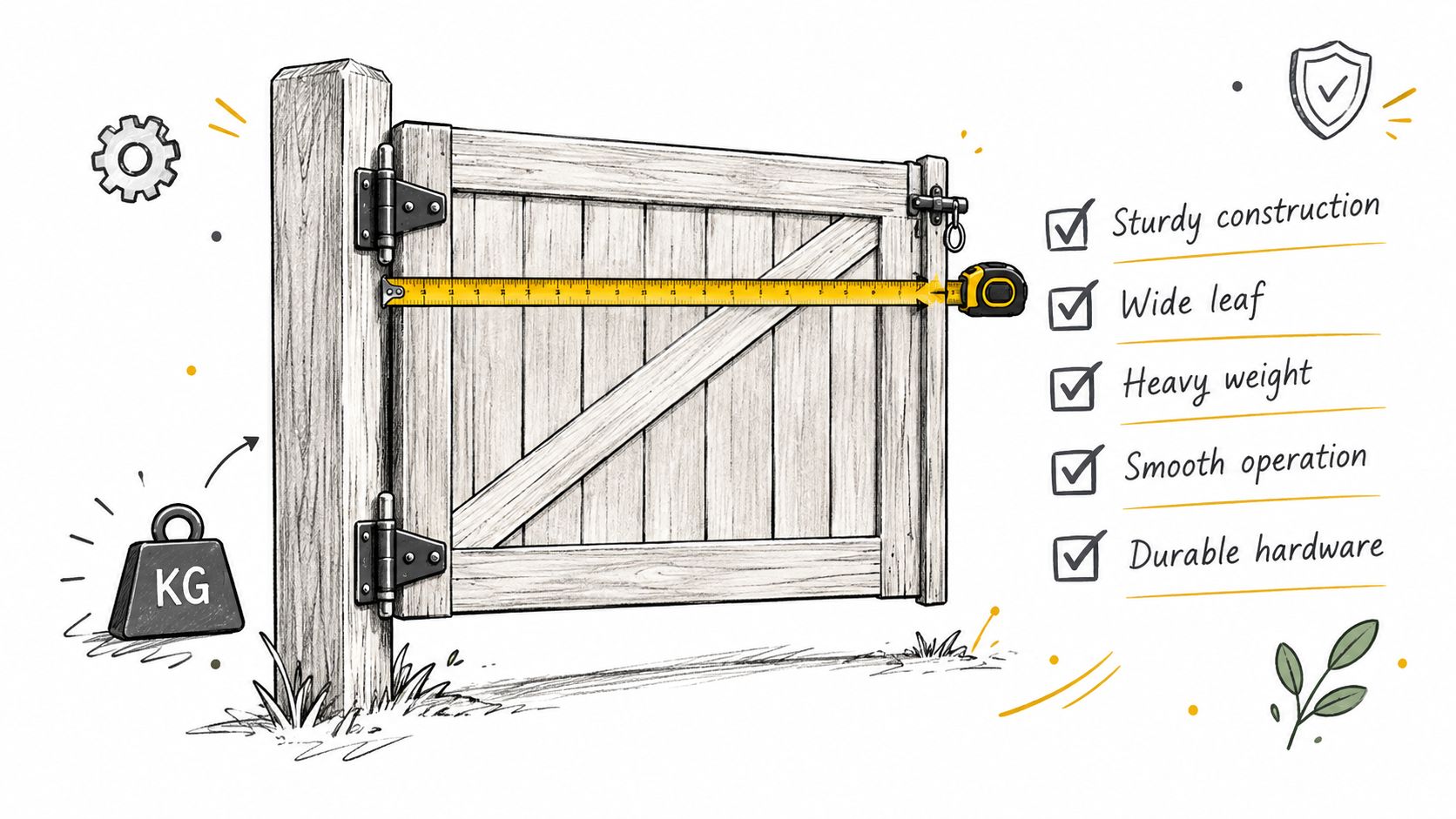
Advertised gate weight is only a starting point. Selection should account for leaf width, mass, hinge friction, slope, wind exposure, mounting geometry, and cycle frequency. Ignoring those factors can produce nuisance reversals, incomplete closure, overheating, or accelerated actuator wear even when the gate's static weight falls within the advertised limit.
For a retrofit, the assessment should describe the gate as it exists today. An old drawing or an approximate weight won't reveal a sagging leaf, altered infill, or a post that has moved.
Build a Site Assessment
The installer should record the conditions that affect selection, rather than choose the largest motor available.
- Dimensions and mass: Record each leaf separately and compare the combination with the manufacturer's ratings.
- Mechanical condition: Identify hinge resistance, dragging, distortion, damaged supports, and unsuitable stops.
- Site exposure: Describe slope and wind exposure, including the gate's infill.
- Operating demand: Establish whether use is occasional residential access or frequent traffic at an HOA, multifamily property, or commercial entrance.
- Mounting space: Check the operator's required geometry against the actual hinge and post arrangement.
The aim is a matched installation, not excess force. A higher-rated operator doesn't remove the need to repair a mechanically unsuitable gate.
Assess the Entire Swing Path
The ASTM F2200 standard for automated vehicular gate construction explicitly covers horizontal swing gates and requires automated vehicular gate systems to comply with ASTM F2200 and UL 325. Its performance-based and prescriptive requirements concern gate design, construction, and installation, so a listed operator alone doesn't establish compliance; local requirements vary.
Gate geometry guidance associated with UL 325 and ASTM F2200 identifies hazards around the hinge side, leading edge, posts, walls, and fixed surfaces toward which the gate swings. It also describes a construction safeguard intended to prevent a detached gate from falling more than 45 degrees from vertical.
A hypothetical gate opening toward a masonry wall illustrates the selection problem. Its dimensions might suit an actuator, while its opening path still creates an entrapment hazard that requires separate attention.
Once the mechanical specification is settled, access-management requirements can be evaluated independently. The cellular gate access system buyer's guide provides a separate starting point for that decision without making phone access the basis of motor selection.
Installation Steps That Meet Safety Standards
Installation should follow a compliance-first sequence, with normal operation withheld until the required protection is installed and verified. The manufacturer's instructions govern mounting, wiring, approved accessories, and commissioning for the particular operator. Models differ, so a generic diagram shouldn't substitute for the correct manual.
The sequence below is a project acceptance framework, not a universal wiring procedure. Electrical connections, force measurements, and safety-system commissioning belong with a qualified technician when the property's staff lack the necessary training.
Establish the Installation Requirements
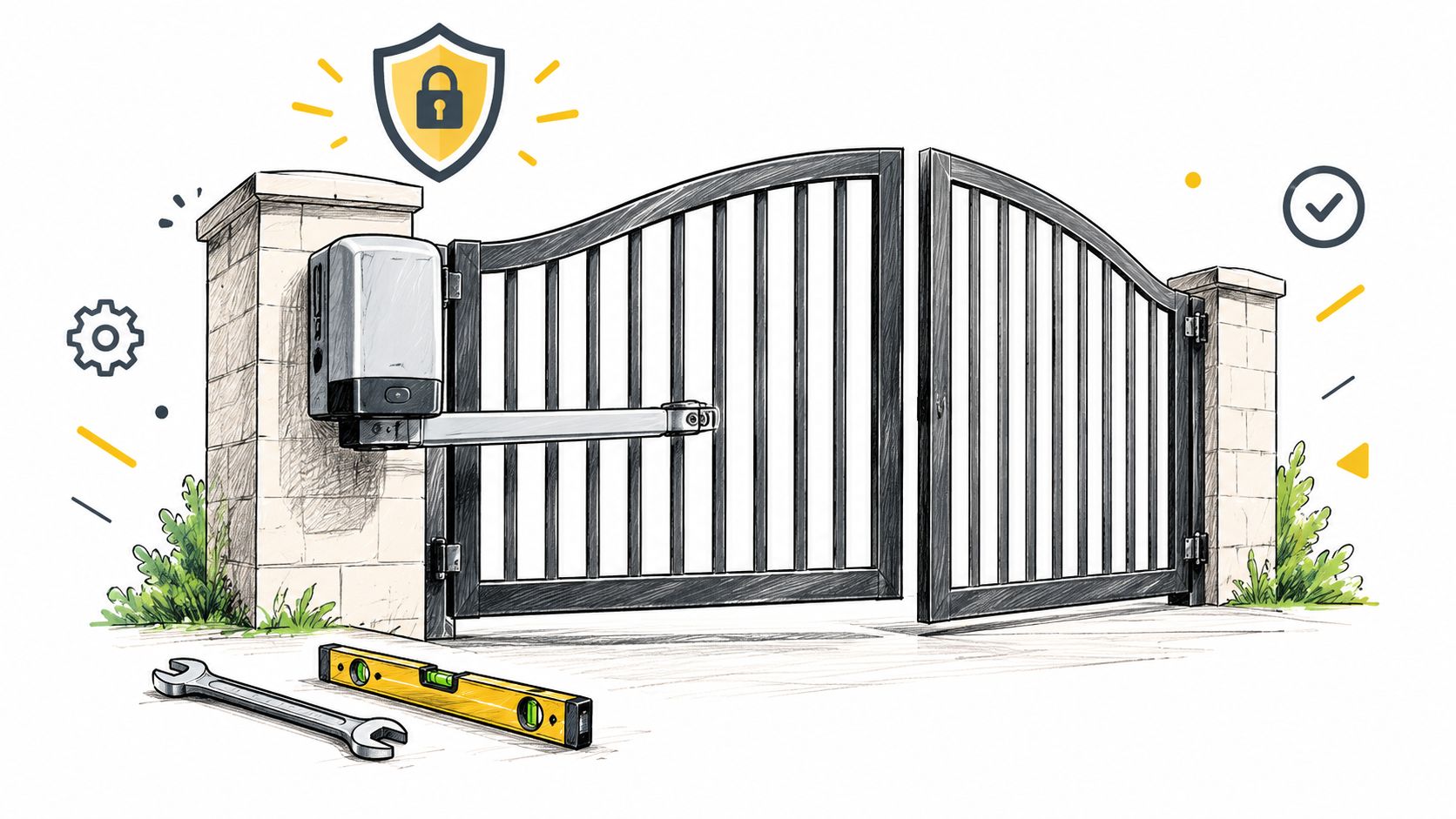
- Confirm operator suitability. Check that the operator is listed by a recognized testing laboratory and classified for the intended vehicular swing-gate application. Obtain its installation instructions before work begins.
- Resolve gate defects. Inspect for binding, excessive load, damaged hinges, inadequate stops, and hazardous clearances. Structural corrections should precede operator commissioning.
- Map entrapment zones. Assess opening and closing separately. The installer should identify where a moving leaf could trap someone against another object.
- Specify compatible protection. Select the protective devices required for those zones and confirm that the operator supports their intended use.
- Commission and document. Test obstruction response, reversal, and reset behavior before enabling ordinary access.
Under the cited DASMA installation guidance for ANSI/CAN/UL 325, hazardous directions generally require two independent entrapment-protection means; acceptable mechanisms include inherent force limiting, monitored photoelectric sensors, and contact edges, with an obstruction-response benchmark of stopping or reversing within 2 seconds, a cited force-limiting maximum of 40 lbf, ordinary activation controls at least 6 feet from moving parts, and reset controls within line of sight. Local requirements vary, and the technician must apply the relevant guidance to the specific operator and site.
Verify Protection in Both Directions
Built-in force sensing shouldn't be assumed sufficient everywhere. A closing-side sensor arrangement also shouldn't be assumed to protect the opening stroke.
DASMA's swing-operator entrapment guidance explains that a direction without an entrapment zone may qualify for an exception, while the hazardous direction still requires the applicable independent protection. Required devices must be connected and enabled for the operator to function as intended.
Acceptance rule: A successful movement test proves that the motor can move the gate. It doesn't prove that the installation's protective functions work.
The handover should include the operator model, approved sensor details, final settings, test results, and reset procedure. That record gives the next technician a baseline instead of leaving another round of undocumented adjustments.
If the installer cannot explain how each identified hazard is protected, the project isn't ready for normal service. An owner should request that explanation before accepting the installation.
Power Options and Access Control Retrofits
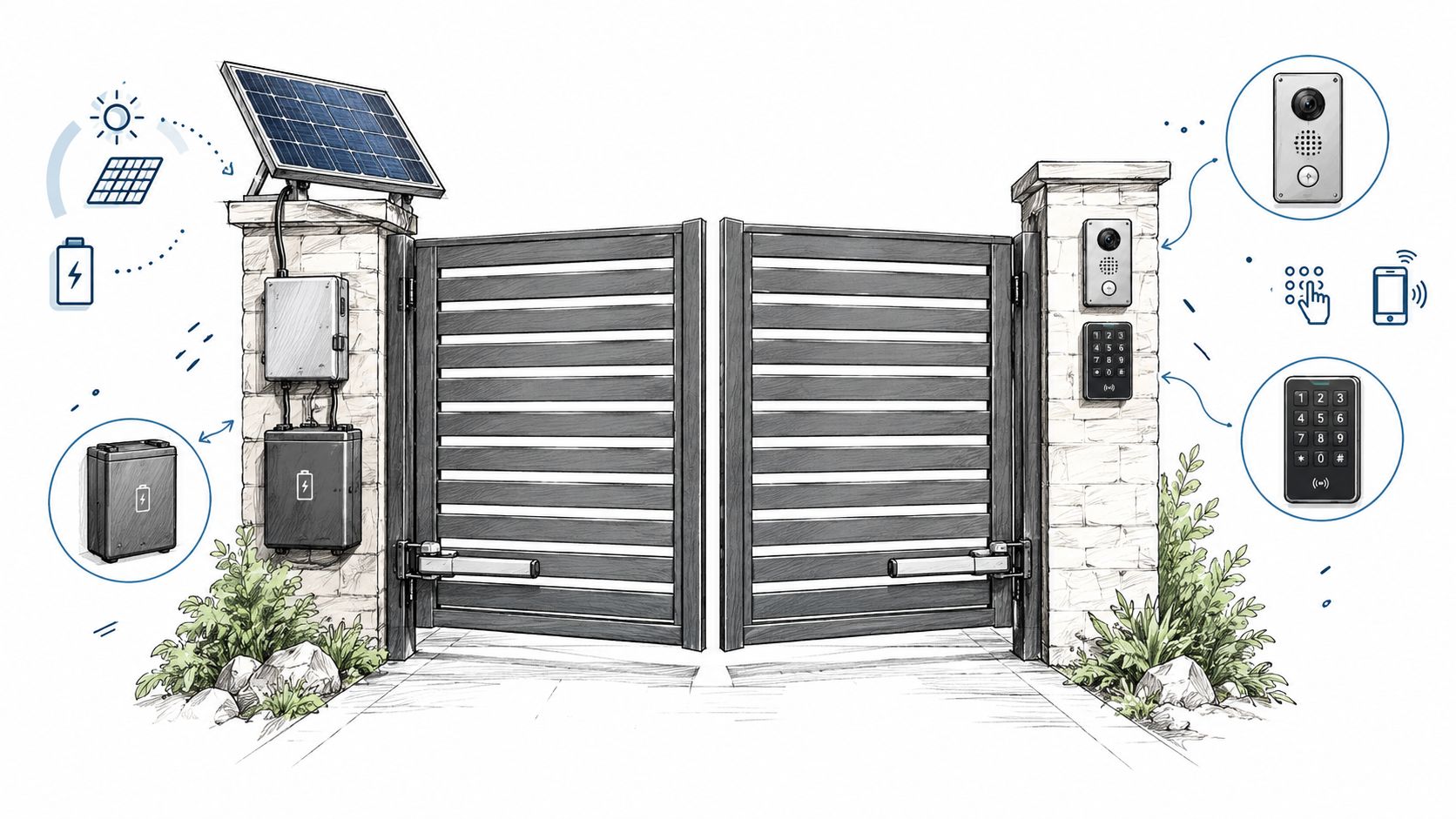
Power and access control solve different problems. The power arrangement must support the chosen operator and its accessories, while access control manages permission to enter. Neither decision should be made from a product photograph alone.
The alternatives should be evaluated against the manufacturer's documentation and the property's operating needs. Without a selected model and site assessment, promises about battery endurance, solar capacity, or outage operation would be guesswork.
Compare the Power Arrangement
| Option | Practical selection question | Trade-off to resolve |
|---|---|---|
| AC line power | Is a suitable electrical supply available at the gate? | Installation work and outage behavior must be included in the scope. |
| Solar with batteries | Does the manufacturer approve the arrangement for the site and workload? | Panel placement, charging conditions, and battery servicing require attention. |
| Low-voltage DC equipment | What supplies and charges the system? | The motor's voltage description doesn't establish backup capability. |
For an occasional residential entrance, the assessment may focus on access during outages and straightforward servicing. An HOA or commercial property should also define how an interruption affects residents, deliveries, staff, and emergency access.
A solar arrangement shouldn't be treated as maintenance-free, and an AC-powered operator shouldn't be assumed to include working backup power. The quotation should identify what is supplied, what remains optional, and which outage functions the manufacturer supports.
Add Access Control Without Replacing Sound Equipment
Nimbio is one example of a cellular add-on controller and smartphone app: it connects over LTE without Wi-Fi at the gate and wires into the operator already installed. Existing clickers, fobs, and keypads keep working alongside the app; managers can issue and revoke digital keys remotely, set key expiration dates, and admit visitors remotely with video verification.
For properties considering retrofitting legacy gate operators, the useful distinction is between changing access permissions and changing the gate's mechanical operation. A sound operator may remain in service while the property adopts a different way to manage entry.
For readers considering access-control planning in Perth, Safety Space compliance access resources offer an additional reference point. Any provider's guidance should be checked against the applicable local rules rather than treated as proof of gate compliance.
Phone control doesn't repair a hinge, protect a pinch point, or verify a sensor.
DASMA's gate-safety guidance supports that distinction: remote access cannot substitute for entrapment protection, correct geometry, or recurring testing, and an older frame, hinge, or stop may remain the primary risk after a retrofit. Access upgrades should follow a safety assessment, not defer one.
Troubleshooting Common Installation Issues
A gate that reverses, stops, or fails to move needs an observation record before another adjustment. The useful details are the direction of travel, where the failure occurs, whether it repeats, and the exact displayed fault message. Staff shouldn't guess what an indicator light means.
TOPENS' manufacturer guidance on installation mistakes identifies structural defects, mounting errors, wiring mistakes, and limit or force settings as areas requiring attention, while directing installers to model-specific instructions. That guidance isn't a substitute for the installed operator's manual; without a model, there is no reliable universal reset, wiring, or adjustment procedure.
Sort Symptoms Without Bypassing Protection
- Reverses before closing: Record the stopping location and any visible obstruction or dragging. A technician should distinguish mechanical resistance from a protective-device response before changing settings.
- Stops mid-travel: Note whether the fault occurs at the same position and whether the controller displays a message. The exact manual must govern diagnosis.
- Reports sensor interruptions: Observe whether the beam area is obstructed or a sensor appears damaged. Alignment and wiring should be checked using the approved procedure.
- Operator runs without gate movement: Stop repeated commands and arrange inspection of the mechanical connection and release mechanism.
On a swing gate, debris along the sweep or near a stop is relevant. Advice about cleaning a sliding-gate track shouldn't be copied into a swing-gate troubleshooting procedure.
A hypothetical gate that fails at the same point after a windy day could have a mechanical problem, a sensor problem, or another fault. The location is useful evidence, but it isn't a diagnosis.
Know When Observation Must Become Service
Staff can report visible conditions from outside the moving area. They shouldn't bridge sensor terminals, increase force to overcome an unexplained fault, or repeatedly command a gate that behaves unpredictably.
California's horizontal sliding and swinging gate safety discussion draft recommends inspection and documentation covering corrosion, wear, guarding, balance, and function, and discusses manufacturer-directed battery, connection, lubrication, and manual-operation checks. It is discussion material, not a universal legal requirement, and local requirements vary.
Remote status is useful information, but it cannot establish the physical condition of hinges, stops, or the sensor area. A technician should verify travel limits, approved sensor operation, and manual release using the actual operator manual before returning a faulty gate to service.
Maintenance and Emergency Operation Planning
Maintenance should have a named owner, an accessible record, and a defined escalation path. Otherwise, a resident may report a fault to management, management may assume the installer knows, and the gate may remain in use without anyone taking responsibility.
The schedule should reflect the manufacturer's instructions and operating demand. An occasional residential gate, an HOA entrance, and a logistics property shouldn't receive identical service plans merely because they use similar-looking actuators.
Match the Plan to the Property
For a low-traffic residential property, the owner needs a manageable inspection routine and a clear contact for faults. An HOA needs an assigned person to receive reports, retain service records, and arrange repairs without relying on informal resident messages.
Commercial and logistics properties should discuss more frequent professional review when usage and consequences of failure warrant it. Inspection frequency should be established from the equipment instructions and site assessment, not an invented universal interval.
- Routine observation: Look for damage, corrosion, displaced guarding, or changes in gate position from a safe location.
- Approved owner maintenance: Perform lubrication, battery checks, and manual-operation checks only where the manufacturer assigns those tasks to the owner.
- Technical service: Refer electrical work, force adjustment, sensor repairs, and structural defects to a qualified technician.
The recurring safety guidance cited earlier calls for monthly reversal or sensor-activated stopping tests. The method must come from the operator's instructions, with trained personnel or a technician responsible for procedures that require specialized testing.
Prepare for Outages Before They Happen
An outage plan should identify who can access the release mechanism, where the instructions are stored, and who decides whether the gate can safely return to automatic service. It should also address safe egress and the property's security needs during the interruption.
Outage planning: Knowing where the release key is stored isn't enough. The designated person must know the approved procedure and when not to attempt it.
A failed backup battery and a mechanically jammed gate require different responses. Staff shouldn't force a damaged leaf because power is unavailable.
Before automatic operation resumes, the responsible technician or trained operator should complete the manufacturer's required restoration checks. Temporary arrangements should have an owner and an end condition so the gate isn't left indefinitely unsecured.
Final Checklist Before You Buy and Install
A purchasing decision should leave the property with a clear scope, not a box of parts and unanswered safety questions. The checklist should cover both procurement and acceptance.
Before the Order
- Gate assessment: Record dimensions, mass, operating demand, mechanical condition, and mounting constraints.
- Hazard map: Identify pinch, crush, and shear points along the full swing path.
- Equipment scope: Confirm operator suitability, compatible protection, power equipment, and required structural work.
- Documentation: Obtain the correct installation and operating manuals before approving the package.
Before Normal Service
- Protection verification: Confirm that each hazardous direction has its required independent protection.
- Commissioning record: Retain photocell and edge test results, force and travel-limit settings, and reset instructions.
- Emergency arrangements: Assign release access, outage responsibilities, and the technician contact.
- Maintenance ownership: Establish who performs routine checks and who arranges qualified repairs.
UL's gate-operator guidance for code authorities supports recording cycle counts, faults, obstruction events, and periodic force or sensor tests for commercial, multifamily, and high-cycle properties. It also advises consultation with local authorities because building, fire, electrical, and accessibility requirements may add obligations beyond UL 325; local requirements vary.
Before approving a swing gate opener kit, the property manager should ask for a written acceptance plan and a documented handover. That makes the installer's responsibilities clear and gives the property a usable basis for future service.
Nimbio offers a cellular controller and smartphone app that add remote access to an existing electric gate while keeping current clickers, fobs, and keypads working. Property managers evaluating access control alongside a swing gate opener kit can visit Nimbio to explore the retrofit approach after the gate's mechanical and safety requirements are established.